

So, you’re looking to sell products online an exciting step into the world of entrepreneurship!
Successful online and eCommerce ventures invest time upfront in researching their market and making informed decisions about what to sell. This guide isn’t just about listing popular products and categories that are currently trending.
While we’ll cover some of these trends, our primary goal is to equip you with the tools to conduct your own product research. This will help you stay ahead of market trends and competitors, allowing you to carve out a profitable niche.
Ultimately, the best products for your online business are those you can effectively market and sell. If you find success in your chosen product category, sub-categories, or niche, you’re on your way to building a successful online business.
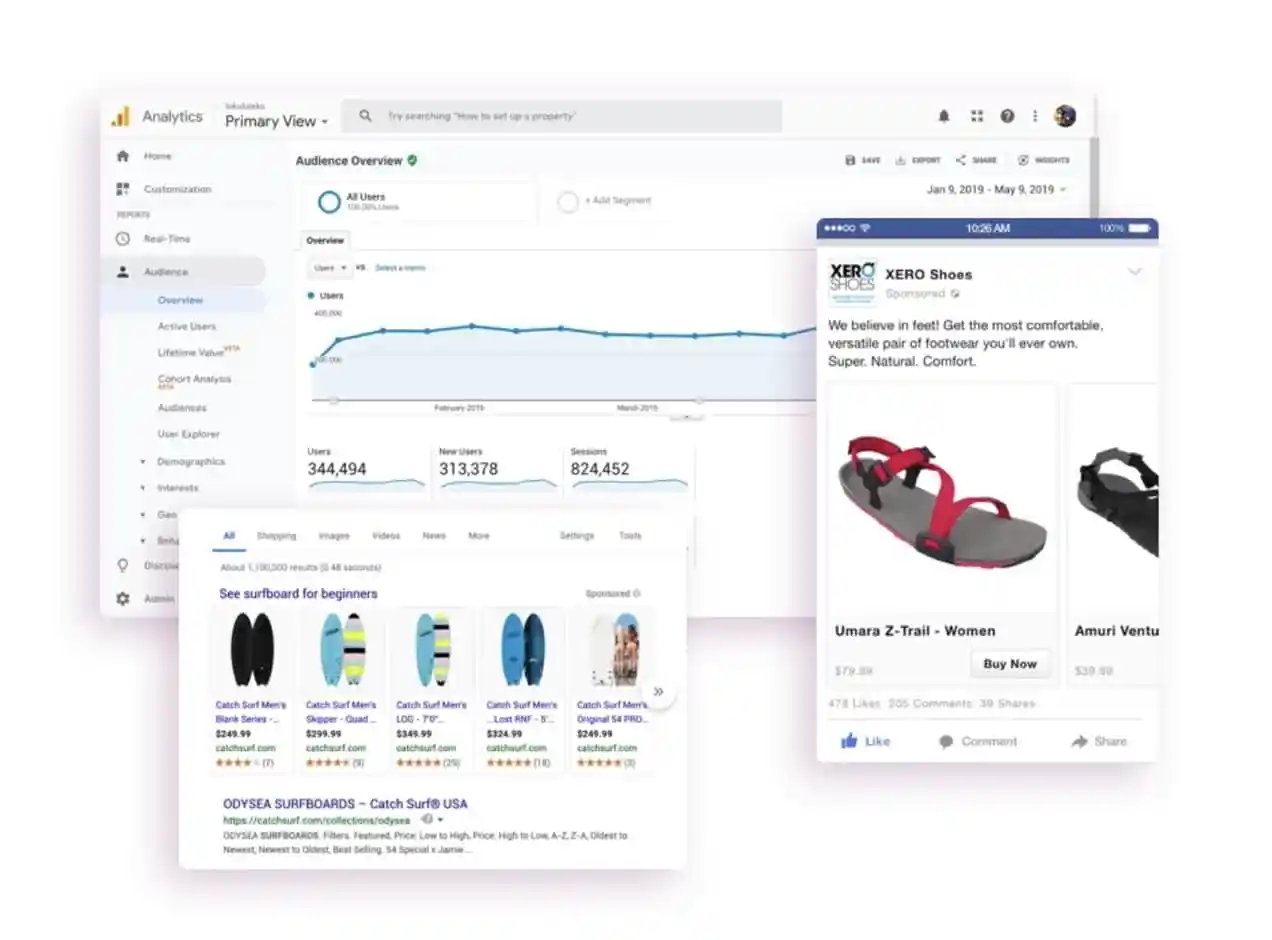
When selling products online, aim for items that are in demand but not in an oversaturated market. You want to avoid competing against large retailers while finding a niche that is both profitable and has room for growth.
So, how do you identify the ideal online business to start?
This guide is designed to assist you in discovering the best products to sell online, tailored to your unique situation, interests, experience, creativity, and passions.
Is selling products online easy?
Consider the skills you already have in areas such as business management, product development, marketing strategies, and online selling. Selling trending products online largely depends on your existing knowledge, your willingness to learn, and how effectively you apply your skills.
The more expertise you have, the smoother your online selling journey will be. Regardless of your skill level, successful online selling also requires a solid concept, effective systems and platforms like WooCommerce, strategic marketing, and a receptive audience.
Is it simple? Generally speaking, it’s easier than launching a traditional brick-and-mortar store. Online selling typically involves lower startup costs, reduced risks, minimal overhead, and greater flexibility to adapt and pivot as needed.
The best part is, even if you’re new to the field, you have ample opportunities to learn. Reading this article is a great starting point!
If you’re eager to dive into selling products online, don’t let a lack of experience hold you back. Start now, learn continuously, make consistent progress, and you can achieve success.

How do I become an online product seller?
If you don’t yet have a product idea, that’s where you should start. Consider what you want to sell in your own online store and explore the industries and products that interest you the most.
You’ll often come across advice about finding your niche. A niche is crucial because it's impossible to sell everything to everyone.
By identifying a niche, you can target an audience with specific needs that aren’t being met by larger retailers. Niche products also enhance your visibility online, even if you’re a new, small online business.
For instance, a new online store selling coffee mugs may struggle to rank on the first page of search results for the broad keyword “coffee mugs.” It’s too general and competitive.
However, a store specializing in funny, color-changing coffee mugs designed for cat owners targets a specific niche with a dedicated audience. This precise focus allows you to compete more effectively with larger online retailers right from the start.
If you have ideas for toys for toddlers, refine them further and learn how to describe them in detail. Are the toys amusing, educational, or designed to boost brain development? Are they intended for individuals, families, or groups? Are they disposable or eco-friendly?
This is just the beginning. The more clearly you define what differentiates the toys in your store from those in a generic “toy store,” the better you’ll be able to attract your target audience.
When considering products to sell online, avoid getting bogged down by broad categories. Start by listing products and ideas that interest you. Then, explore these ideas online to identify specific niches within larger categories. Narrowing your focus to a smaller set of niche products is the key to finding successful items to sell online.
What are the most sold items online?
Searching for the best-selling products of 2023 or any other year will yield various lists, each featuring different items. This inconsistency arises because there is no standardized way to tabulate best-selling products by category.
Why is that? Because there are multiple criteria for determining what constitutes a "best-seller." Is it based on volume—number of units sold? Is it about profitability? Revenue before expenses? Comparison with competitors? Or is it specific to your category or industry?
Choosing the right products to sell online involves more than just picking popular items. It also includes deciding on your selling strategy and identifying your target audience. Let's briefly explore both aspects.
Ways to sell products online
For those interested in launching an online business, there are numerous strategies for establishing your presence, sourcing and managing inventory, and more. These strategies are not mutually exclusive and can be combined to create your ideal business model.
Here are some options you can choose from and pair together to build your perfect business model:

Sell through your own ecommerce store
By setting up your own online store using a platform such as WooCommerce, you can sell products directly to consumers, businesses, or wholesalers. This allows you to manage every aspect of your business through your own website.
Sell through an existing online marketplace
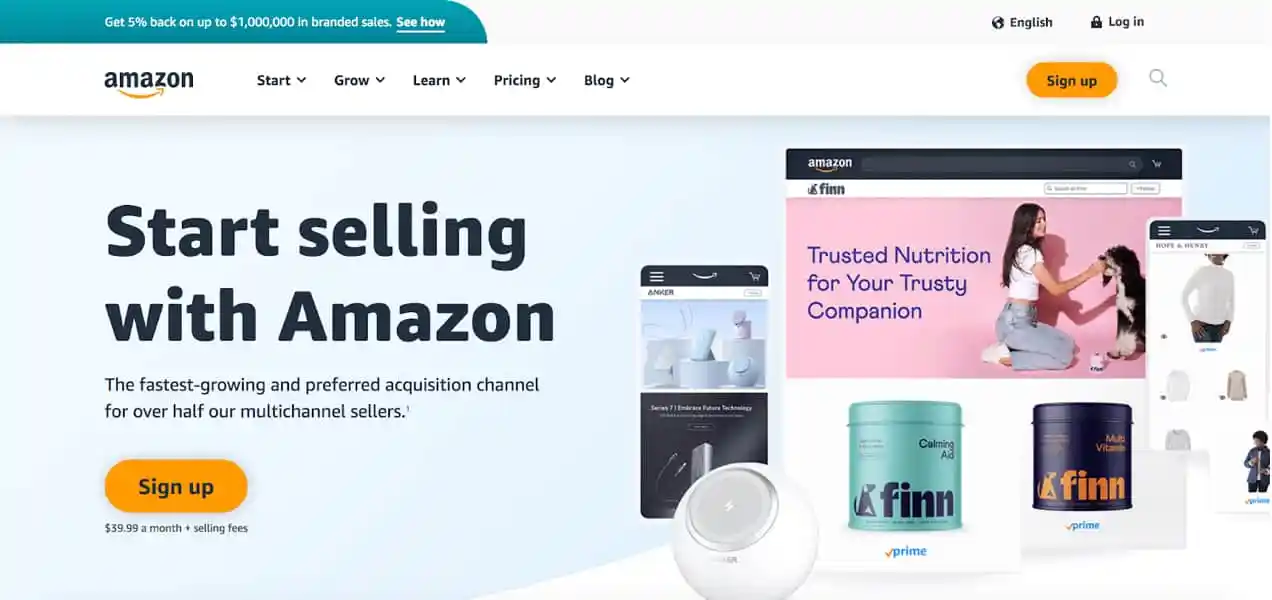
Alternatively, you can sell your products through platforms such as eBay or Etsy, or invest time in learning how to sell on Amazon. These major online marketplaces offer their own set of terms and conditions, along with established audiences and brand recognition. We will explore the advantages and disadvantages of these approaches shortly.
Manage and sell your own inventory
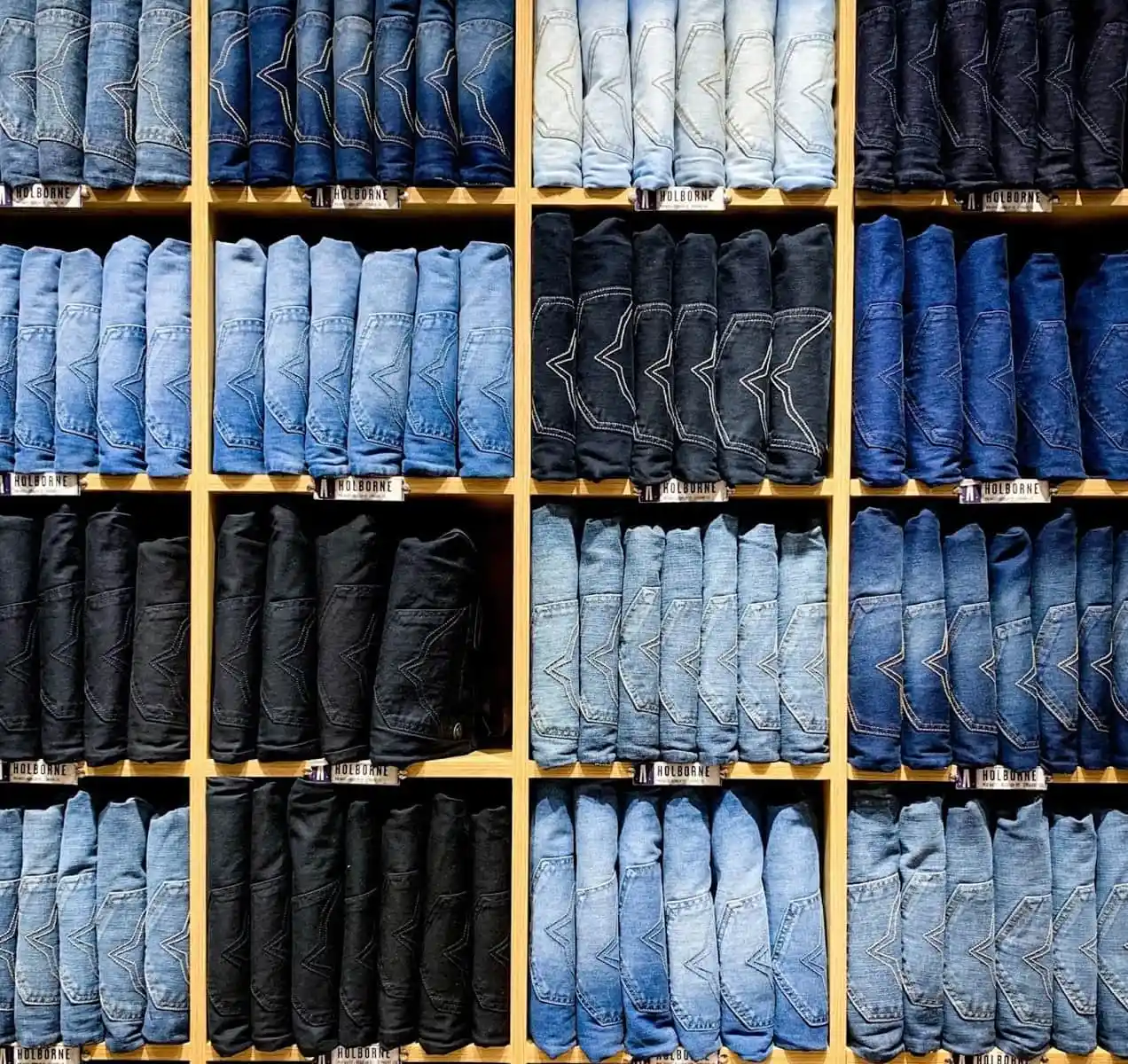
If you have available space, whether rented or owned, you can stock and sell your own products through your online store. You'll need to implement systems to manage inventory effectively, ensuring you maintain stock levels without overstocking and risking unsold merchandise.
Sell through dropshipping
If you prefer not to handle your own inventory, dropshipping is an option. In this model, you select products to sell that are manufactured and stored by third parties.
When a product is sold, it is shipped directly from the manufacturer or wholesaler to the customer.
Keep in mind that while some products are well-suited to dropshipping, others may not be as compatible with this method.

Start a print on demand business
This approach is a variation of dropshipping where products are only created when an order is placed. However, in this case, you handle the manufacturing yourself or collaborate directly with a manufacturer.
Print-on-demand is commonly used for various products, including printed materials like books and media, as well as customized items such as clothing and branded merchandise. For instance, you could sell pens, mugs, and other office supplies that are personalized based on each customer's requirements.

Manufacture your own products
If you have the capability to create your own products to sell online, you may want to do this to maintain quality and cut out intermediaries so you can keep your prices down while making a good profit. Again, this is easier with some products than others.

Sell pre-existing products
Another option is to sell products manufactured by others, acting as an intermediary by marking up items purchased from suppliers and selling them to your own customers. Additionally, you can enhance this model by creating your own private label based on popular, pre-existing products.

Sell wholesale
Alternatively, you can become an online wholesaler, supplying other online and brick-and-mortar businesses with their inventory and merchandise. This approach necessitates having sufficient storage space and the capability to manage larger volumes of products.
What’s better — selling on Amazon or your own ecommerce store?
Generally, running your own online store tends to be more rewarding than selling through platforms like Amazon or other online marketplaces. Here are some key reasons:
- No competition from other products on the same page alongside yours.
- Less concern about competing prices.
- Greater freedom, as platforms like Amazon can change their terms, delist you, or raise their fees without prior notice.
- More opportunities to build customer loyalty and brand recognition.
- The ability to grow without limitations.
- You will own all your customer information, which is a highly valuable asset as it grows.
Although starting out on a platform like Amazon might be easier due to its established infrastructure and initial traffic, the advantages of owning your own online store often outweigh the benefits offered by Amazon, particularly for long-term growth.
Another viable option is to utilize both platforms simultaneously. You can start by selling on Amazon to gain reviews and build product awareness, while concurrently developing and expanding your own ecommerce store. Over time, you can shift your focus away from Amazon and let your independent online store thrive.
Who to sell to
Your choice of products will partly define your target audience. However, there are additional factors to consider when determining who to sell to. You can choose to target customers based on various attributes, including:
- Demographics such as age and gender
- Occupations
- Life situations, such as people with children, retirees, or singles
- Socio-economic status
- Ethnicity
- Location, including countries, states, provinces, regions, or cities
Additionally, you can target businesses through B2B (business-to-business) sales. This approach fits with wholesale but can also apply to any online store that sells trending products to other businesses.
Your target market will evolve based on the products you choose to sell and may shift over time. As you start your online selling journey, it's crucial to define your potential customers and build your strategy around them.
What product has the highest margin?
Online products with the highest profit margins are typically non-physical items. Products such as online courses, memberships, online coaching groups, and eBooks fall into this category. These products require no inventory, manufacturing, or production once created. After the initial creation, you can sell the same product to an unlimited number of buyers.
Software products also belong to this category, though the development process usually involves more people, which increases production costs and reduces margins initially. However, if your software becomes widely adopted, it can also achieve very high profit margins.

What products can I sell online from home?
Starting a home-based business with dropshipping can be a straightforward approach, as it eliminates the need to handle and store inventory. Dropshipping offers several benefits, including low startup costs, no shipping fees or warehouse expenses, reduced risk, and minimal staffing needs. However, it can be challenging to establish a presence in the market and you may have less control over your products.
Explore the advantages and disadvantages of dropshipping and learn how to get started. You can also check out dropshipping suppliers to understand their offerings and operations.
Two prominent dropshipping supplier platforms are AliExpress and Spocket.
If you choose to use dropshipping for your online store, the setup process will differ from a traditional ecommerce store. Here’s how to establish a dropshipping business.
Factors that affect product sales and profits
So how can you narrow down your ideas for which products you want to start selling online? Here are a few considerations that affect how well a product sells and your potential profit margins:
Margins
Your profit margin for each product is calculated by subtracting the cost of manufacturing or acquiring the product from the selling price. For example, selling a product for $200 that costs $180 to produce might not be as advantageous as selling a product for $50 that costs $25 to produce.
Shelf Life and Perishability
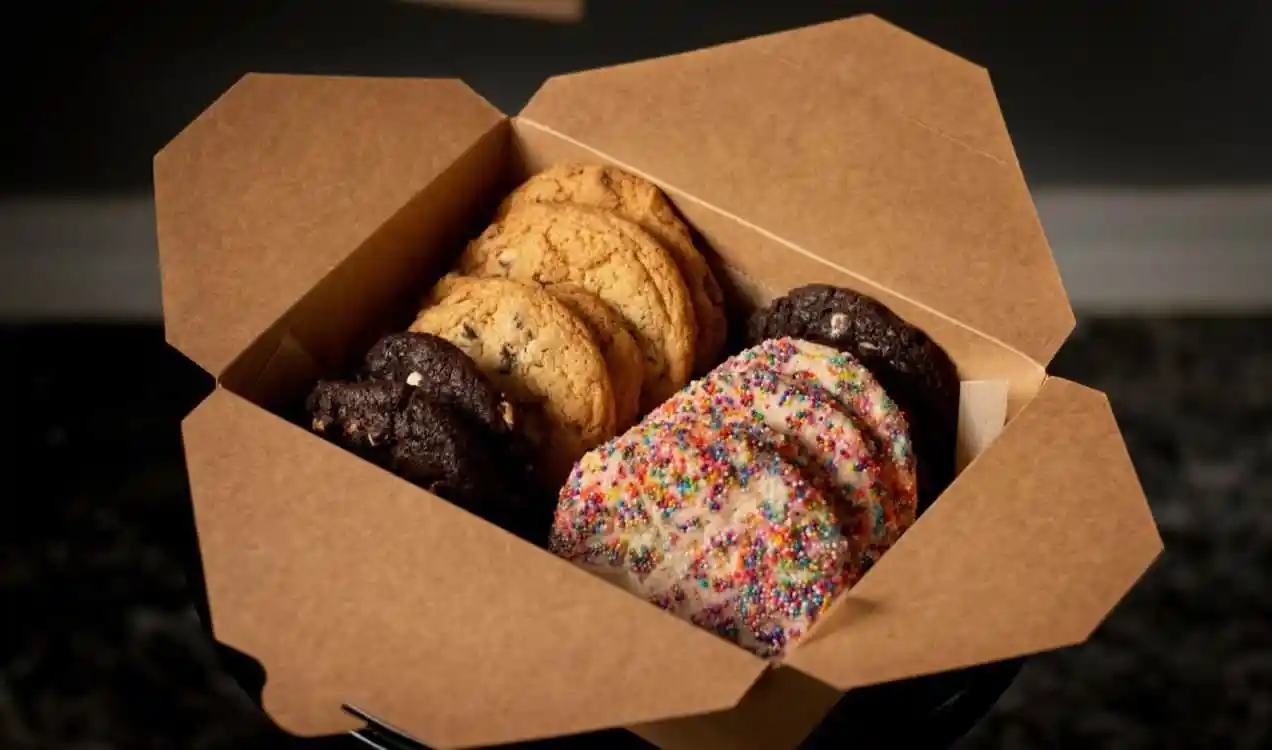
Perishability isn’t just a concern for food; it also affects items like building materials, certain skin and beauty products, and other goods. While products with longer shelf lives might be more appealing to customers, they also mean less frequent sales opportunities. There’s no definitive ‘right’ or ‘wrong’ choice here, but it’s an important factor to consider when evaluating product ideas.
Perishable items also carry the risk of unsold inventory. If you’re unable to sell these products before they expire, you may lose the entire value of the goods.
Size and Weight
Larger and heavier items incur higher shipping costs and require more substantial packaging. This means you’ll either need to incorporate shipping costs into your product pricing or charge more for shipping, which could deter some customers.
Additionally, bigger and heavier products generally lead to increased storage and inventory management expenses.

Consumable or Non-Consumable
Consumable products are not limited to food. Any item that customers use up and need to replace regularly holds strong potential for ongoing sales. This creates a recurring revenue opportunity as customers return to purchase more. In contrast, products that people buy infrequently or only once—like a wrench that lasts for years or artwork that fills limited space in a home—might not drive repeated sales.
While these non-consumable items can still be valuable niches, considering whether your products are consumable or not can be an important factor in shaping your online sales strategy.
How do you come up with a product and sell it?
The answer to this question largely depends on the online business model that suits you best.
If you choose dropshipping, you won't need to manage inventory or create products yourself. Instead, you'll be selling pre-existing items. While you will need to focus on developing your brand, creating marketing strategies, and setting up your online store, coming up with product ideas is not part of your responsibility.

This is likely true for wholesaling as well. If you opt for wholesaling, you might act as an intermediary between large wholesalers and businesses in need of those products. For example, you could purchase products in bulk from a major wholesaler in another country, mark them up, and become a local distributor for your city, state, province, or region.
With this approach, you wouldn’t need to create the products yourself.
In the case of a print-on-demand company, while the 'canvas' for the products is not created by you, the customization is crucial. You'll need to offer unique designs or personalization that attracts customers or businesses. This requires creativity and technical skills to develop your own style, artwork, or other forms of customization.

Additionally, you need to know how to work with suppliers who can provide the 'canvases' for your products, whether they are shirts, mugs, pens, notebooks, water bottles, or any other items you wish to offer in your ecommerce store.
If you are manufacturing your own products, the process becomes significantly more complex. For instance, if you are producing food items, you need to source ingredients and develop recipes. For other products, you must find raw materials and establish a manufacturing process.
For digital products, such as software or informational content, you will need to handle coding, writing, and design aspects yourself.
Before committing to developing a new product—especially one with substantial upfront costs—it's wise to conduct market research to gauge demand for your idea. Let’s explore market research in more detail.
What else is selling big right now? What’s in demand?
How do you find out what products are in demand in other online stores? Here are four good methods to find trending products:
Use Google Trends
Utilize Google Trends to Understand Consumer Behavior
Google Trends is an invaluable tool for gaining insights into consumer interests. If you have potential products in mind, it allows you to explore keyword popularity and gauge the level of interest in those products.
Additionally, Google Trends provides broader insights into consumer behavior. For instance, Google's analysis of 2022 trends reveals key observations:
- Increased Interest in Travel: Travel-related searches have surged as people try to make up for lost time during the pandemic. Searches such as “best travel pillow” have risen by 145%, “airline reviews” by 70%, and “best credit cards for travel” by 30%. If your product is related to travel or can be positioned as such, this growing interest offers a significant opportunity.
- Impact of Economic Uncertainty: On the flip side, consumers are increasingly searching for ways to save money and manage stress. With the economic future in flux, searches for “cheap alternative to” have increased by 30%, and “how to save money” has jumped by 50%. Searches related to stress management and burnout symptoms have also seen significant rises, with burnout symptoms up by 85%. If your product addresses these issues, it may find a strong market.
If you're launching a new online store or aiming to expand your current presence, consider reviewing Google’s report on the future of retail. It discusses how consumers are shifting towards personalized experiences across various channels and moving away from brand loyalty.
When you're ready to market your products, WooCommerce's Google Listings & Ads extension can help you reach millions of shoppers on Google with free product listings and a streamlined advertising experience, enhancing your marketing efforts.
How to use Google Trends for product research
To use Google Trends, after you reach the main page, begin by clicking on the Explore tab. Then type in a product category or other search term that is relevant to your product idea.
Location trends
Using Google Trends to Identify Regional Interest
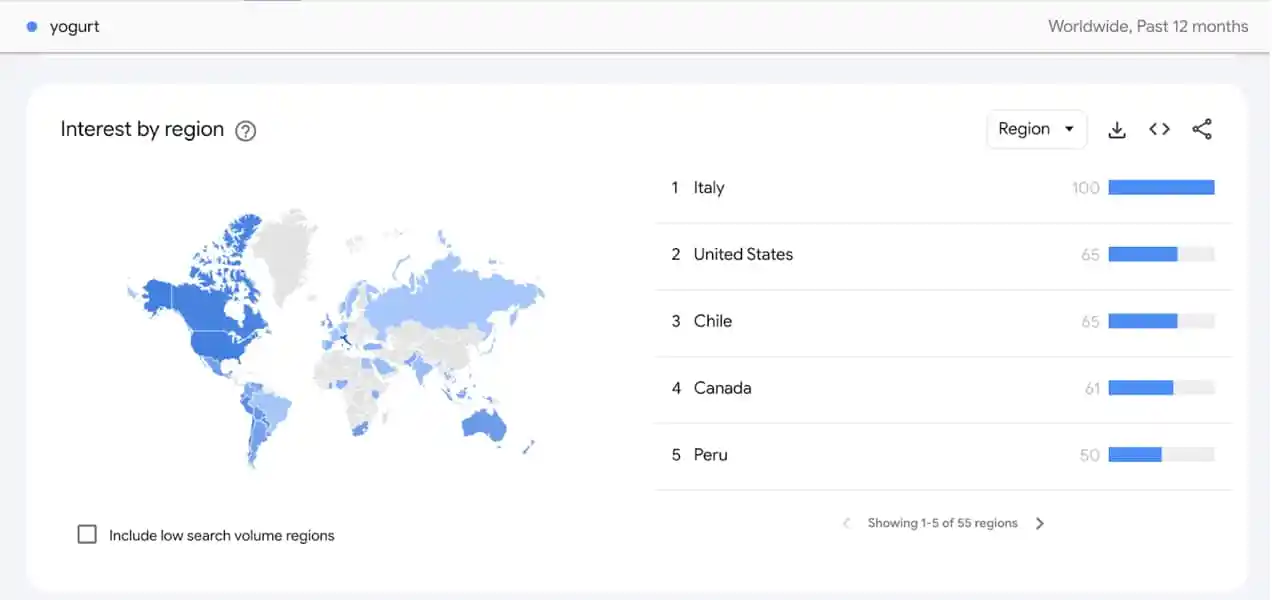
For instance, if you search for 'yogurt' on Google Trends, you can see interest levels in yogurt based on location. You have the option to refine this data from states to large metropolitan areas and even down to specific cities. This detailed information can be valuable if you plan to target certain areas initially. Focus on regions with the highest demand to maximize your reach.

Related topics
Exploring Related Topics on Google Trends
Google Trends also provides insights into related topics. For example, if you search for 'yogurt,' you might see terms like 'protein — nutrient' as related topics. These are not direct synonyms but are connected in some way.
This feature helps you discover potential product lines or new markets that might be interested in products from your ecommerce business. For instance, the recent rise in Greek yogurt popularity could be tied to a broader demand for alternative, nutrient-rich protein sources. Understanding related interests can help you identify other products or areas that might attract the same consumer base.
Use Amazon
Using Amazon Data to Discover Trending Products
Even if you’re not selling directly through Amazon, you can still leverage their extensive data to explore popular and trending products and categories. Amazon provides a wealth of information that you can use to identify which products are currently in demand.
Here's how to find products to sell using Amazon's sales data:
Movers and shakers
Explore Amazon’s Movers and Shakers for Product Trends
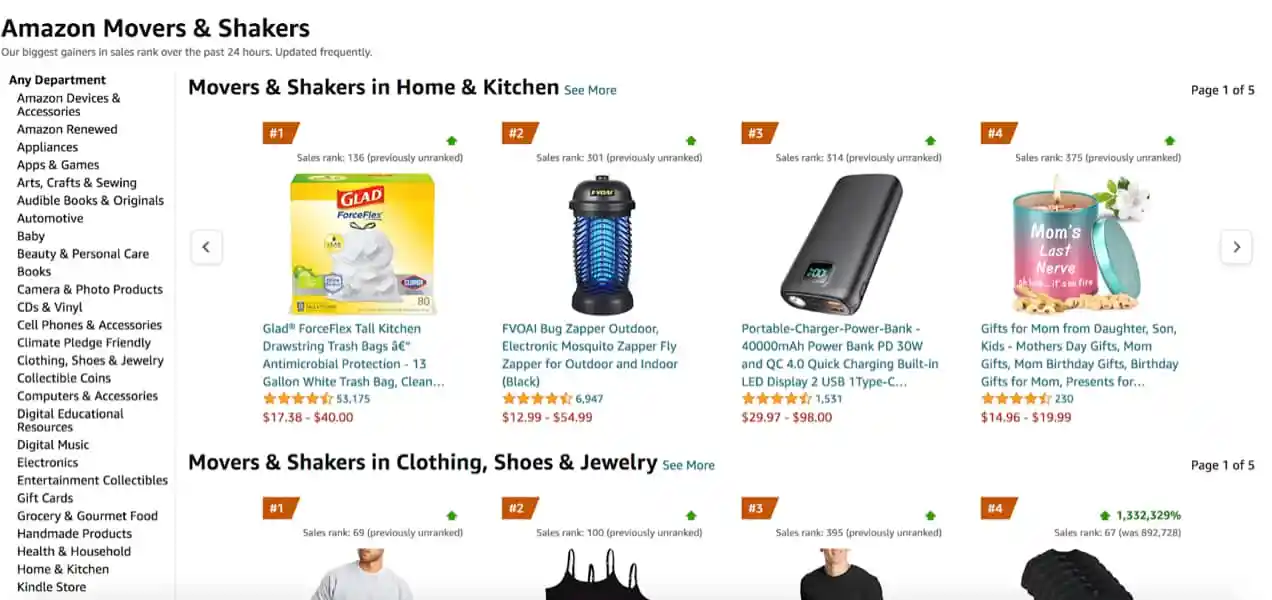
Start by visiting Amazon’s Movers and Shakers section. This area highlights products that have experienced the largest increase in sales over a specific time frame. It’s similar to the ‘rising’ queries you find in Google Trends, but instead of search terms, you’re looking at actual products.
Checking the Movers and Shakers list for just one day might not be very insightful, as these lists update frequently. However, by monitoring this section daily for a few months and focusing on a few product categories that interest you, you can start to notice patterns and trends.
Look for any products or brands that consistently appear. Consider how factors like seasons, holidays, and news events might influence which products are featured.
Explore Subcategories and Best Seller Ratings on Amazon
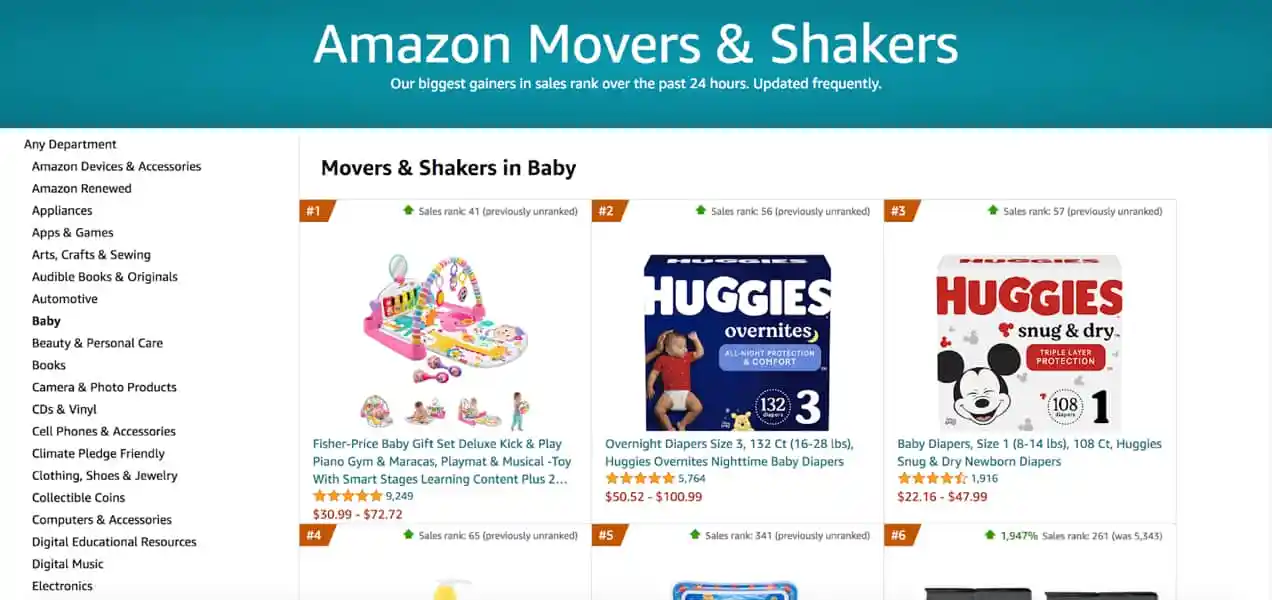
Next, navigate to a main product category, such as 'baby,' and click on it. This will reveal a list of subcategories like strollers, nursery, clothing, and toys. Each of these subcategories can be further explored for more specific product types.
Use this to drill down into very specific product descriptions and categories, similar to how we discussed niche products like color-changing coffee mugs for cat owners.
What should you do here?
- Examine what’s selling well in these subcategories. Look at packaging, brand names, marketing, and product descriptions.
- Read customer reviews to understand what buyers appreciate and where the products might be lacking.
- Identify any gaps or unmet needs that you could address with your own product offerings.
Best Seller Ratings (BSR)
Amazon uses Best Seller Ratings (BSR) to indicate how well products are selling. This metric helps both sellers and buyers gauge the popularity of items.
While BSR can give you an idea of potential sales volume on Amazon, it’s important to remember that sales depend on various factors such as pricing and category. Nonetheless, BSR offers a useful insight into product demand.
Categories that consistently show high demand on Amazon include home and kitchen, health and personal care, sports and outdoors, and beauty.
Tap into TikTok
Utilize TikTok Trends and Research to Find Your Next Big Product
TikTok has become incredibly influential, with users sharing their purchases under the popular hashtag #TikTokMadeMeBuyIt, which boasts over 50 billion views. This platform offers a rich source of inspiration for new online business ideas and is an excellent starting point for your research.
TikTok also provides valuable resources for merchants, including the ability to view top products and filter results by location, product categories, and more. You can also use the search function to find specific product insights.
The platform’s new insights portal offers detailed data on consumer behavior by generation, location, and industry.
When you're ready to leverage TikTok for your own products, WooCommerce store owners can benefit from the TikTok for WooCommerce extension. This tool synchronizes your store’s inventory with TikTok, allowing you to create ads automatically without needing a professional designer or video team. The advanced tracking pixel helps maximize your ad spend return and quickly connects you with an audience eager for your products.
Use Research to Guide Your Product Exploration
In addition to tools like Google Trends and Amazon, start with basic search engine queries to guide your research. Look for sales statistics related to your product interests. Ensure that the sources and dates are relevant and accurate, as there is a wealth of data available to help identify trending products.
For instance, searching broadly for terms like "kitchen sales statistics" might yield too much information. A more specific search, such as "food storage container sales statistics," will provide more targeted and useful data.
To refine your search, use narrower terms and consider substituting ‘data’ for ‘statistics.’ This approach will help you find more relevant information about specific product categories.
After identifying promising categories on Amazon, search for related sales data online. Additionally, consult industry sites and associations for research and reports that can guide your product exploration.
How do you conduct market research?
Expand Your Market Research Beyond Trends and Statistics
Trends and statistics are just the beginning of market research. To gain a comprehensive understanding, you should explore various aspects. Consider researching the following:
- Demand: Utilize Google Trends and Amazon BSRs to gauge consumer interest.
- Market Size: Sales data and search queries can provide insights into the size of the market.
- Economic Indicators: Assess which income demographics are most likely to be interested in your products.
- Location: Google Trends can also help you understand regional demand if you’re targeting specific locations.
- Market Saturation: Determine if there is excessive competition or if there is space for new options.
- Pricing: Investigate the current pricing of products related to your idea to set competitive prices.
Qualtrics suggests focusing your research on one of four key areas:
- Consumer: Examine current or past customer behavior.
- Company: Analyze aspects like your product, service, marketing efforts, and pricing.
- Competition: Understand how your products impact others in the market.
- Industry: Look into the overall trends and future directions of the industry.
To conduct thorough research, you can use two main approaches: Primary and Secondary research.

Conduct primary and secondary market research
Primary research involves gathering data yourself through methods such as interviews, surveys, product testing, and focus groups. This approach provides specific insights tailored to your product ideas and objectives.
In contrast, secondary research involves using existing data from sources like online sales statistics or government websites such as the Small Business Administration. While secondary research is often easier to conduct, primary research offers more detailed and relevant information.
Hotjar provides a useful example of primary research through a case study of a company that examined one of their products. They suggest asking the following five questions during interviews to gain deeper insights:
- Who are you and what do you do?
- How do you spend your day?
- Do you ever purchase this type of product or service?
- What problem were you trying to solve or what goal were you trying to achieve with that purchase?
- Take me back to the day when you first decided you needed to solve this problem or achieve this goal.
These questions are designed to uncover the thought processes and motivations behind consumer purchase decisions.

Research competitor search traffic
Another effective market research strategy involves using SEO tools such as Ahrefs, Moz, or Buzzsumo.
These tools can reveal which websites are attracting traffic from search terms and keywords related to your product ideas and categories. You can access data on impressions and clicks for various search terms, as well as insights into your competitors' PPC (pay-per-click) advertising efforts.
To clarify these terms, an impression occurs when a search result appears in response to a query, while a click happens when a user selects that search result. Typically, impressions will be higher than clicks. The same terminology applies to PPC advertising.
This information is valuable for multiple reasons, not just for market research. It helps you understand your competition and what you’re up against in terms of organic or paid traffic. Additionally, it provides insights into what potential customers are searching for and clicking on, indicating demand for specific terms.
Note that these are paid services. However, if you're just starting out and want to manage costs, you can opt for a one-month subscription to conduct your initial research and then cancel if needed.
Some popular products selling online
Are you looking for examples of products to sell online? Keep in mind that any list of the best products to sell is just a snapshot. The real value lies in understanding how to determine what makes a good product, how to identify trends, compare products, and explore various online selling methods.
However, some broad online selling trends tend to remain consistent over time. For instance, Amazon consistently reports strong sales in these categories:
- Home and Kitchen
- Health and Personal Care
- Sports and Outdoors
- Beauty
Here are a few specific examples:
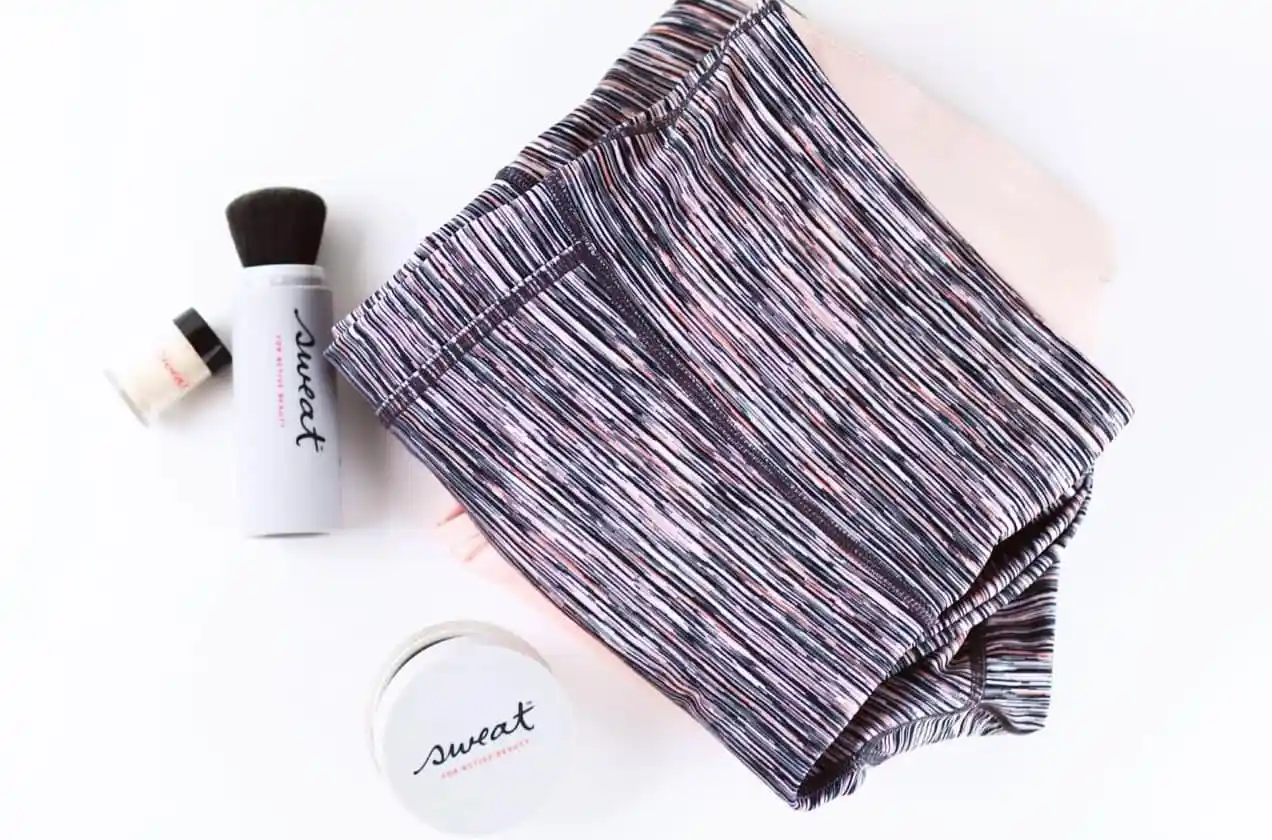
Shapewear
Shapewear is increasingly popular, and unlike many fleeting fashion trends, it offers practical benefits. Designed to be both comfortable and stylish, shapewear helps people feel more confident in their clothing.
Modern shapewear is made from lightweight materials, making it easy to ship. Some popular options in this category include:
- Control slips
- Leggings
- Bodysuits
For many, shapewear doubles as sportswear, worn at the gym or during outdoor exercise. Its versatility and functional appeal have made it a staple in contemporary fashion.
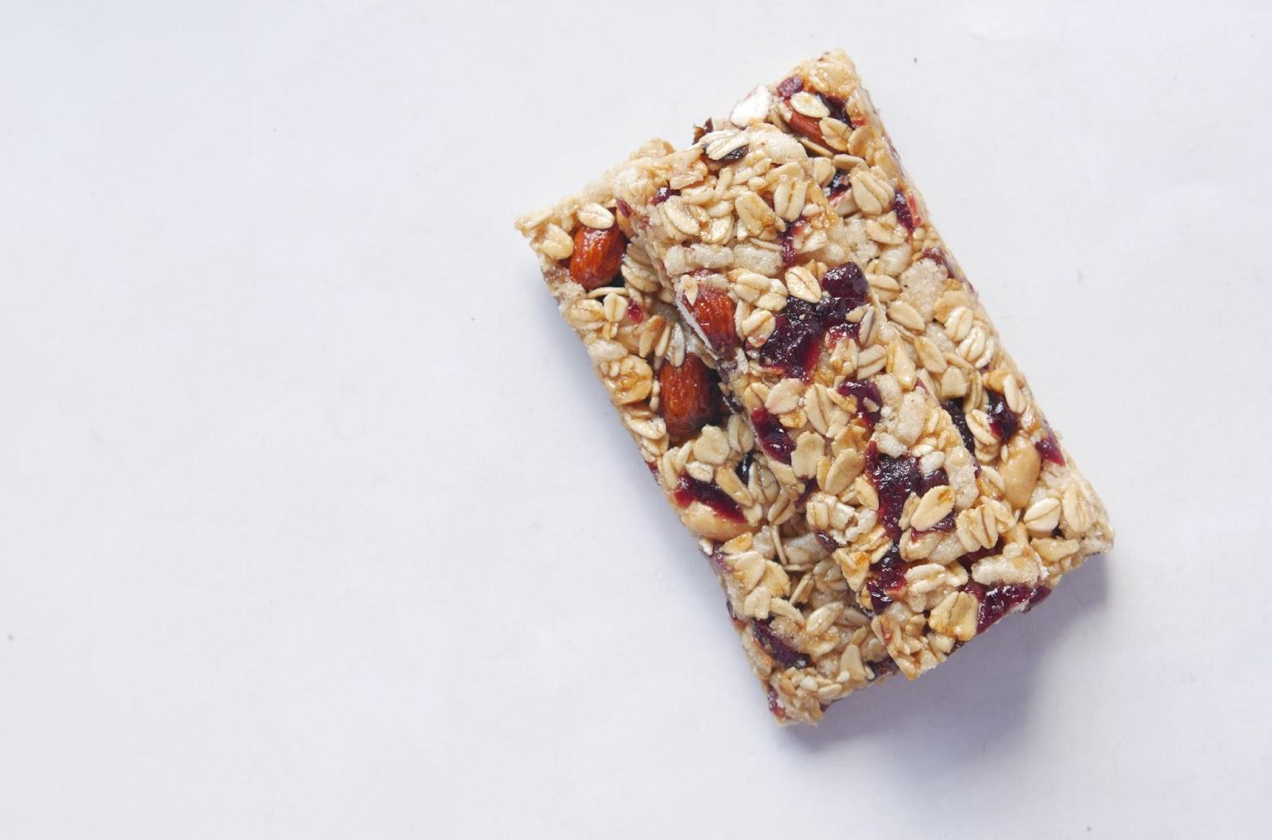
Health and wellness
Many consumers are willing to invest more in organic foods and products that are locally-sourced or farm-raised. Additionally, some shoppers look for foods that cater to specific dietary needs, such as low-fat, nutrient-rich, vegan, or Keto options.
Examples of popular health and fitness products include:
- Dietary supplements
- Multivitamins
- Protein shakes
- Energy bars
Pet supplies
Nearly 70% of U.S. households own pets, making the online pet market a reliable and stable product category. Pet owners frequently need to replace toys and accessories, in addition to purchasing food.
Social media influencers are increasingly influential in promoting pet products. To attract customers, consider creating engaging or valuable content for your ecommerce business and encourage visitors to explore your offerings. Here are some popular pet products to consider:
- Pet beds
- Dog toothbrushes
- LED dog collars
- Biting toys

Home and kitchen
While the shelf life of kitchen products may be long, people are continually searching for new ways to cook, organize, and store items in their kitchens.
There will always be a steady stream of buyers, from young adults moving out of their parents' homes to those starting families, buying new homes, and even as they reach retirement and beyond. Home and kitchen supplies, accessories, utensils, and storage solutions will remain in demand.
Examples of popular home and kitchen products include:
- Non-slip kitchen mats
- Silverware sets
- Drawer and cabinet organizers
- Drying racks
- Brooms and dustpans
Ready to start selling online with your own ecommerce business?
WooCommerce provides all the tools you need to establish your online store and kickstart your business.
It integrates seamlessly with WordPress and offers a wide array of plugins and extensions to assist with various aspects of online selling, including marketing, payment processing, coupons and deals, accounting, SEO, and other essential tools for managing your shop.
To discover more about launching a successful online business, explore the features offered by WooCommerce.
Ready to set up your new online store? Check out this comprehensive guide to start selling online.