

GMV (Gross Merchandise Value) is one of the key metrics in eCommerce, and while each metric offers unique insights into your business model, understanding GMV is particularly important. Why? Because it helps you track total revenue growth.
Once you grasp what GMV is and how it's calculated, you can start strategizing on how to leverage this data to boost sales. In this post, we’ll explain what GMV is, how to calculate it, and ways to increase your gross merchandise value.
What is the meaning of GMV?
GMV stands for Gross Merchandise Value. It is defined as the total value of sales transactions within your eCommerce business over a specific period, such as a quarter or a year.
How is GMV calculated?
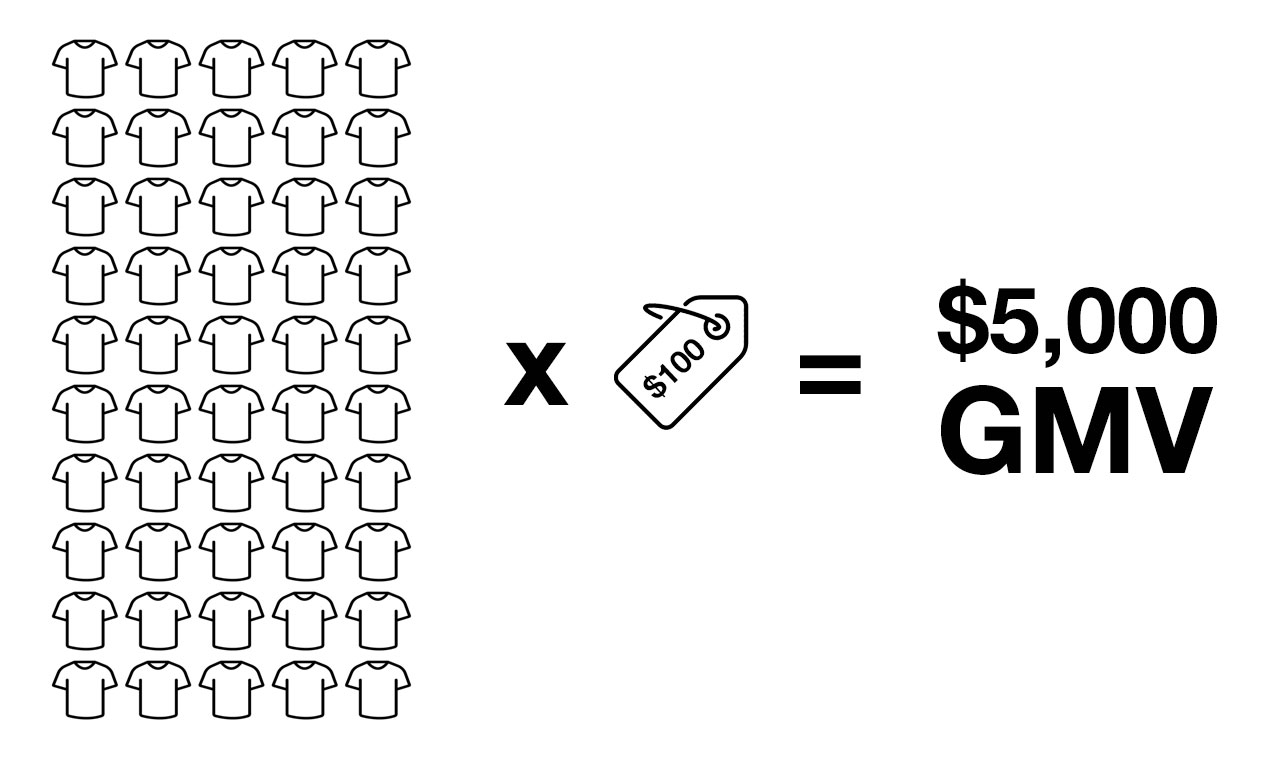
To calculate Gross Merchandise Value, you multiply the sales price by the sales quantity. For instance, if you sell 50 shirts at $100 each, your GMV would be $5,000:
50 shirts x $100/shirt
[Sales Price x Sales Quantity] = GMV
Although GMV sounds similar to revenue and total sales, it’s technically different.
Is GMV the same as revenue?
Gross revenue refers to the total money generated from selling goods or services. For example, commission income contributes to your revenue when you provide a service, but it does not add to your Gross Merchandise Value unless you are managing the inventory yourself.
Is GMV the same as net sales?
To calculate net sales, you subtract sales returns, allowances, and discounts from revenue. However, these expenses are not deducted when calculating GMV.
What is the difference between GMV and GTV?
Gross Transaction Value (GTV) represents the total value of items sold across all sellers in a marketplace, multiplied by the gross value received in a given period. This reflects the net merchandise value or average amount per retail business. In contrast, Gross Merchandise Value (GMV) is calculated similarly but focuses on individual retail companies.
Why is GMV a critical metric?
Understanding Gross Merchandise Value (GMV) is crucial because it offers insights into your eCommerce business’s financial performance over time. If your GMV increases at a healthy pace though this may vary by industry you can assess the effectiveness of your strategies.
For instance, Shopify’s GMV time series demonstrates a consistently growing GMV, with significant growth observed during the initial months of the pandemic:
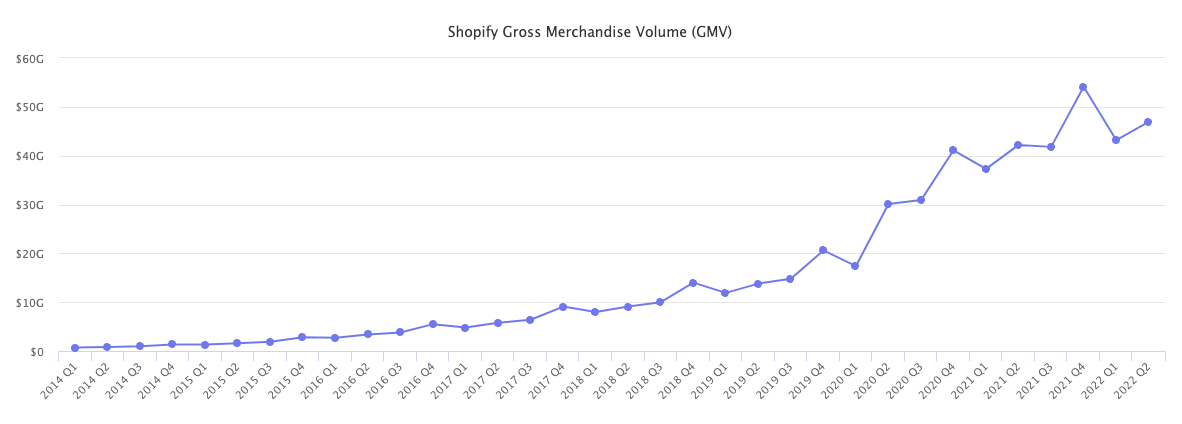
These insights enable Shopify to understand revenue behavior and how both internal and external factors, such as the economy, influence revenue.
You can also compare your absolute GMV and GMV growth rate with those of your competitors. For example, analyzing current quarter sales provides valuable context on your business's performance and potential for growth in a specific period.
Note: Ensure you compare your GMV with other online merchants within the same industry and of similar eCommerce business size. If you are a new company, comparing your gross merchandise value, gross merchandise volume, or other corporate finance metrics with those of Shopify would be inappropriate.
Consistent growth in gross merchandise value indicates that you are either selling more merchandise or offering more expensive items. This is positive, as a rising gross merchandise value translates to bottom-line growth. If your business analysis highlights areas for improvement, you can implement various strategies to enhance your gross merchandise value.
How to increase your GMV
Here are seven strategies and best practices that can help increase your GMV:
1. Offering free shipping
You don’t have to sacrifice margins to offer free shipping; it can be a win-win situation.
Research shows that 80% of customers expect free shipping when their order exceeds a certain threshold. By setting the right threshold, you can meet customer expectations while generating enough profit to cover shipping costs.
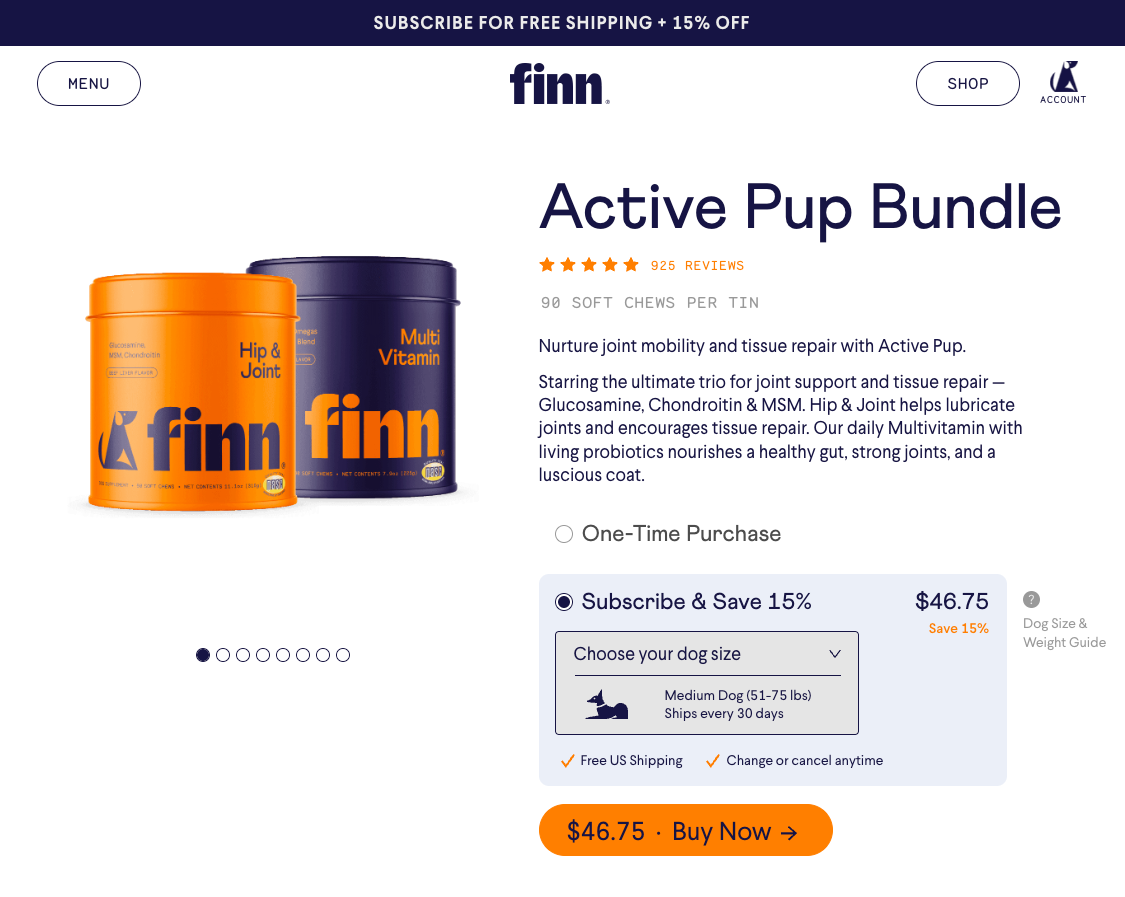
Offering free shipping based on items sold or total sales value is one of the most common strategies to boost gross merchandise value. Promote this message throughout your eCommerce store to encourage customers to increase their average order value to qualify for free shipping.
2. Cross-selling
Recommending complementary items to products that a customer is interested in is an excellent strategy for boosting your gross merchandise value while also reducing advertising costs. This approach enhances the customer experience by guiding them toward products they might genuinely need, thus increasing their average order value.
You can also enhance the customer’s shopping experience by providing a branded tracking page. We recommend using Tracktor, a reliable tracking app, to keep customers engaged with real-time updates and seamless tracking. Additionally, consider recommending related products or offering attractive discounts on your tracking page to further increase gross revenue.
Another advantage of this strategy is that it lowers your customer acquisition cost. Increasing the total transaction value from a single customer is always more cost-effective than acquiring a new customer.
3. Product bundles
Product bundles allow customers to purchase complementary items under a single SKU (stock-keeping unit). For instance, someone buying a razor might also need razor blades. Bundled deals help increase sales of such products while effectively managing inventory.
Companies often offer product bundles at a lower price than the total of their individual items.
Harry’s is a great example of effective product bundling. The men’s grooming brand sells razor handles individually and as part of a shaving set. The Winston handle is priced at $20, while the Winston Set which includes the handle, blade cartridges, shaving gel, and a travel cover is available for just $25:
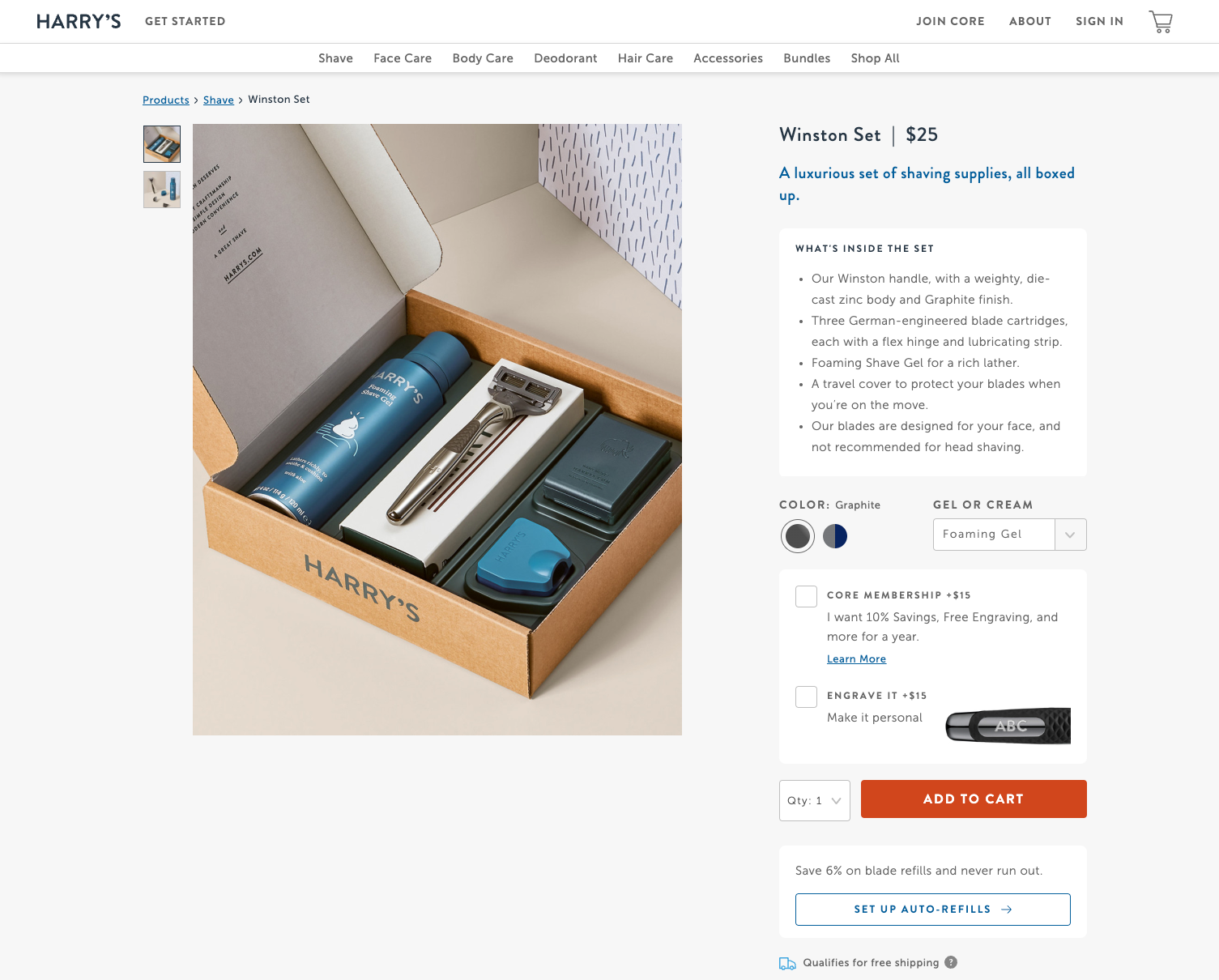
Thanks to product bundles, Harry’s is able to move merchandise more quickly and increase GMV, all while customers enjoy a great deal.
Want to implement a product bundling strategy in your Shopify online store? It’s simple with Infinite Options an app that helps you create product bundles and add limitless product options across your eCommerce site.

4. Offer discounts based on order volume
Volume discounts are valuable because competing solely on price can be challenging. For instance, with a 20% gross profit margin, cutting prices by 5% necessitates a 33.3% increase in sales volume to maintain your bottom line. This is a risky move; if sales don’t increase by that amount, you may boost your GMV but at the cost of your gross and net income.
This is where volume discounts come into play. For example, if you offer a 10% discount to customers who purchase four or more items originally priced at $100, the price drops to $90 ($100 – 10% discount). While this reduces your gross profit per unit from $20 to $10, you would still earn a minimum of $40 ($10 per unit x 4 units) on each discounted order.
In this way, volume discounts enable you to increase GMV while preserving your gross profit.
5. Start a loyalty and rewards program
Customers tend to trust recommendations from friends and family more than advertisements or marketing materials. Implementing a loyalty and rewards program can incentivize customers to refer others in exchange for a reward, ultimately boosting your GMV over time.
You don’t need a complex rewards program that requires managing points balances, like Amazon’s. A straightforward referral program can be equally effective. Here’s a simple template to get you started with offering incentives to new customers:
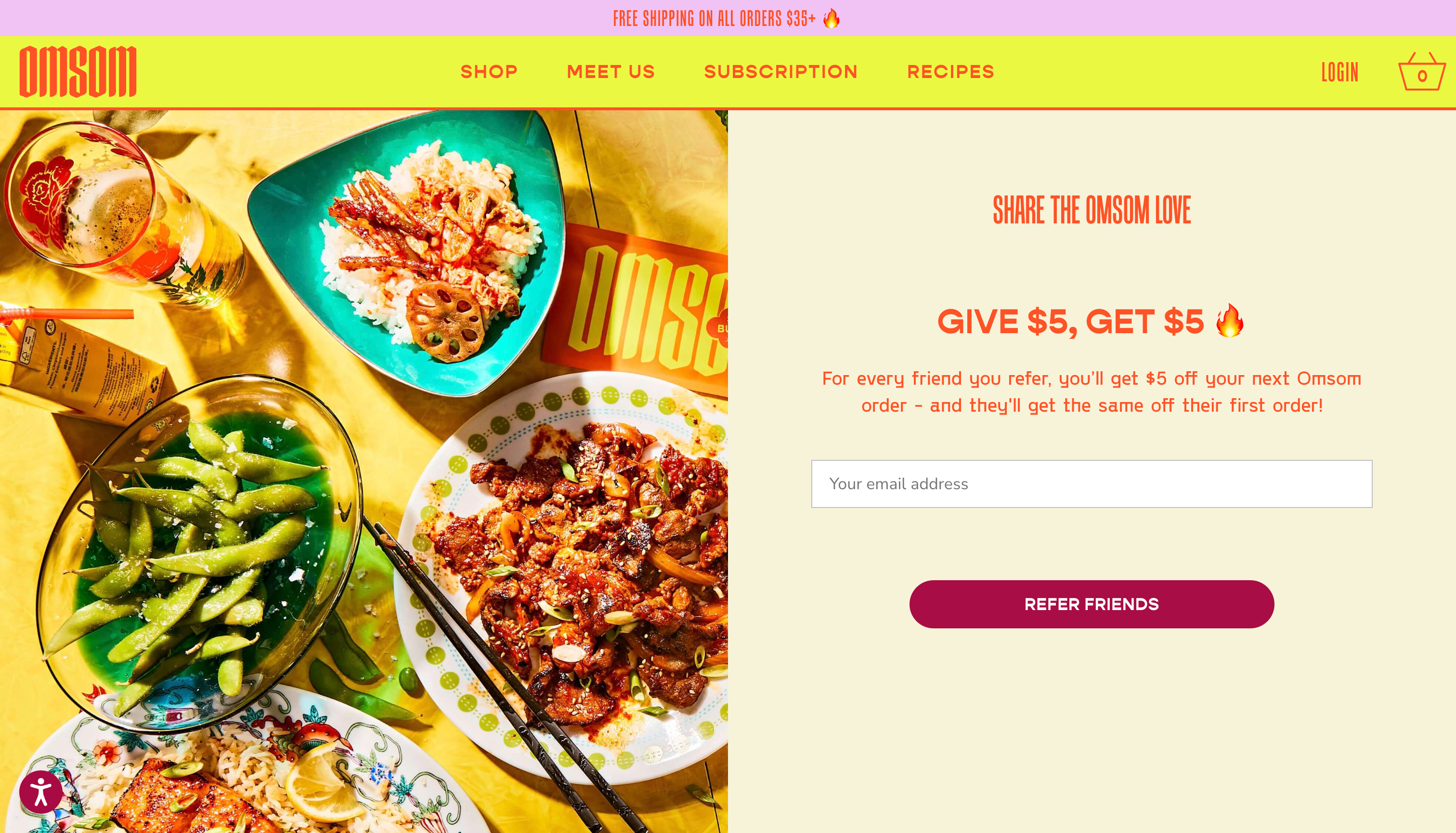
Alternatively, take inspiration from Omsom, which has a straightforward yet effective referral program. The brand offers $5 off your next Omsom order for each friend you refer, and your friend also receives $5 off their first order.
6. Elevate the customer experience
According to recent studies, 44.5% of companies view customer experience as a key differentiator. To remain competitive, it’s essential to offer personalized experiences.
McKinsey reports that personalized experiences can enhance conversion rates by 10% to 15%. However, the advantages extend beyond just conversions.
By providing customers with a memorable experience, you encourage repeat purchases, thereby increasing their customer lifetime value. Satisfied customers are likely to share their positive experiences with friends, becoming advocates for your brand. You can start small by bundling a free gift with a new customer’s order using this template:
Additionally, there are various strategies to enhance customer experience. For instance, consider offering shoppers a personalized list of your bestsellers. If you’re in the fashion industry, enabling them to sort this list by location can further tailor their experience.
7. Offer Personalized Products
Personalized products are an excellent way to boost your business's gross merchandise value (GMV).
By providing items that can be customized with a customer's name, initials, uploaded files, or other personal details, you create a sense of exclusivity. This makes each customer feel like they are receiving a unique item made just for them.
This approach can enhance your conversion rate, as customers are more inclined to purchase something they perceive as one-of-a-kind. Moreover, personalized products often command higher price points, allowing you to increase your revenue from these sales.
While personalizing products may not be feasible for every online retailer, if you're looking to improve your bottom line, consider introducing personalized options for your customers.
Examples of businesses that have successfully increased their GMV
Here are examples of brands that have successfully increased their GMV using one or more of the strategies explained in the previous section:
Nguyen Coffee Supply
Nguyen encourages customers who are unsure about which flavor to choose by offering a discounted product bundle. Instead of purchasing just one pack, shoppers can buy all three flavors at a reduced price, allowing them to discover their favorite.
Velour Beauty
Valour offers free shipping on orders over $50. This message is prominently displayed throughout Velour’s site, encouraging shoppers to increase their cart value to $50 in order to save on shipping costs.
Casper
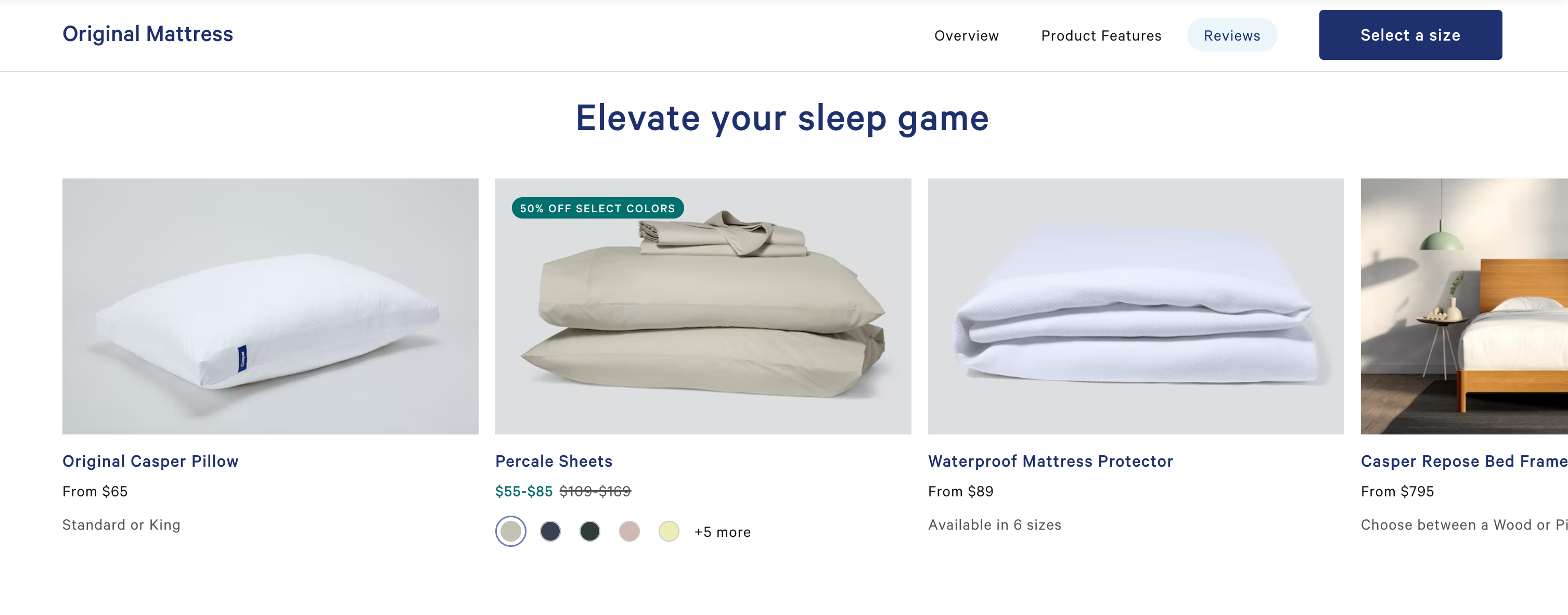
Cross-sell products that complement high-value items typically purchased together. For instance, when buying a mattress, customers are likely to also want new sheets and pillows. Casper effectively showcases related products at the bottom of the mattress product page under an appealing title “Elevate your sleep game”.
Approach GMV from multiple fronts
Instead of relying on a single strategy, implement multiple approaches to boost your gross merchandise value. This diversification of efforts can lead to quicker, more tangible results. While it may feel overwhelming if you're new to business performance, concentrating on key financial metrics can simplify the process.
If you're interested in exploring other financial metrics to enhance your business and assess its financial health, check out our other article: