Welcome to Shopify! Starting an online business involves considering many different factors. While some might assume that running an online store will be inexpensive, the reality is that once you factor in subscription fees, marketing expenses, and product costs, your budget can quickly run out. While this post doesn’t cover every possible expense, we hope it will provide a solid foundation for understanding some of the key costs you'll encounter when launching an online business.
Pricing Plans
Shopify offers a variety of plans tailored to your business needs. As of this writing, we have four pricing tiers designed to meet your business requirements as you grow:
Basic: Ideal for solo entrepreneurs ($39 USD/month)
Shopify: Best for small teams ($105 USD/month)
Advanced: Designed for growing businesses ($399 USD/month)
Plus: For more complex businesses ($2500+ USD/month)
You can explore more about our plans on our plan and pricing page.
If you're just starting out, the Basic plan will likely meet your needs. It includes industry-standard credit card processing rates when using Shopify Payments and a 2% transaction fee for third-party payment gateways. You'll also gain access to an online store, shipping discounts, POS Lite, analytics, and more!
As your business grows and you begin handling recurring orders, you may want to consider upgrading to the Shopify or Advanced plans. These plans provide more detailed sales reports, lower credit card rates, and additional staff accounts, helping you scale smoothly and efficiently.
Domains
When setting up your Shopify store, you’ll receive a free ".myshopify.com" domain. This domain will appear in the address bar when you’re logged into the Shopify admin, and it will be the first domain used to access the online store you create. However, we strongly recommend using a custom domain that better reflects your business.
Custom domains not only make your store look more professional but also help establish trust with your customers. Shoppers are more likely to feel comfortable purchasing from a business that has a registered domain name. You can purchase a domain directly from Shopify, with prices starting at $11 USD per year, which includes Shopify's email hosting. If you prefer using a third-party domain, you can also set up email hosting through services like G Suite (starting at $5 USD per month) or Zoho, which offers both free and paid plans (from $20 USD per month).
Once you’ve purchased and connected your custom domain, submitting your sitemap to Google will allow them to crawl your store and include it in search results, helping to improve your store's visibility.
Themes
Shopify offers a wide selection of themes to suit your business style. Whether you're working with a small or large catalog, selling internationally, or simply prefer a minimalist design, you're likely to find a theme that fits your needs in our theme store. As of this writing, Shopify provides 12 free themes to help you get started. However, if you're looking for additional features or if the free themes don't quite match your style, you can choose from a range of paid themes, typically priced between $140 and $180.
The Shopify theme store is user-friendly and allows you to filter themes based on various criteria, such as price, industry, layout type, and visual effects (e.g., video backgrounds).
Keep in mind that all theme purchases are final. Be sure to take advantage of theme demos and trials to test whether a theme is the right fit for your store before making a purchase.
Apps
While there are many features that every business needs, there are also some that are unique to your specific business and operations. To help you scale effectively, we created the Shopify App Store – a one-stop shop for apps designed to enhance your store's functionality. You can use Shopify apps to seamlessly integrate with popular productivity and business tools like Xero, Zendesk, and Salesforce.
Some apps are developed by third-party Shopify Partners, so it’s important to check user reviews before committing to an app. Keep in mind that these apps are supported by their respective developers, not Shopify’s support team.
App pricing can vary based on the features it offers, so make sure to carefully review the billing information to understand the monthly charges associated with each app.
Inventory
When running your business, it's essential to consider not just the platform costs but also the cost of managing your inventory. There are different ways to run an online store, and some business owners opt for dropshipping or print-on-demand services, which don’t require keeping much inventory. However, if you’re producing or purchasing your own products, you’ll need to think carefully about the costs involved.
Where will your inventory come from? You’ll need to factor in the shipping costs from your supplier to your storage space. The terms you establish with your supplier can also impact these costs. For instance, buying in bulk often reduces the price per item, but you may need to meet a minimum order quantity. If you’re sourcing products from overseas, be sure to consider exchange rates, particularly when placing large orders.
While the total amount you spend will vary based on your business, understanding these factors will help you better manage your finances and make more informed decisions about inventory.
If you plan to keep physical inventory, you might find our blog post on calculating inventory costs and reducing them helpful.
Marketing
Every eCommerce business should include online marketing as a key part of its budget. It's essential to strike the right balance in your marketing spending to ensure effectiveness without overspending. Consider a wide range of marketing strategies, from free options like SEO and organic social media efforts, to paid methods such as influencer partnerships and paid advertising.
Keep in mind that the results of your marketing campaigns often reflect the amount of effort and resources invested. Spending too little may lead to minimal results, while a larger investment could yield significant returns. The key is finding the right balance that works for your business.
Email marketing is one of the most cost-effective tactics and doesn’t require a large budget. Your store likely collects email addresses from checkouts, pop-ups, and newsletter sign-ups, making it easier to get started. The main costs involved typically include the email platform you choose and, potentially, hiring a copywriter to create engaging content.
When it comes to paid advertising, platforms like Google, Facebook, and Instagram are powerful tools for online marketing. Consider your target audience and how much you're willing to spend. Different platforms cater to different audiences, and the cost-per-click (CPC) can vary depending on the platform and the demographic you're targeting.
Google Search ads average CPC was $1.16 per click in 2019.
The average CPC for Google Display ads was $0.46 per click in 2019.
Facebook’s average CPC is $1.86 per click.
Instagram ad clicks can range from $0.20 to $2 per click.
Wrapping Up
Starting an online business with Shopify provides a flexible and scalable platform that can grow alongside your business needs. From selecting the right pricing plan and domain to choosing themes and apps that enhance your store's functionality, each decision plays a crucial role in shaping your business's success. Additionally, managing inventory effectively and investing in targeted marketing strategies are essential for profitability and growth.
A rough estimate for your startup costs may include the Basic Shopify plan at $39 per month, a custom domain priced around $11 per year, and initial marketing efforts, which could range from $50 to $200 in the first few months depending on the strategies you implement. Themes and apps will also contribute to your initial expenses, with themes ranging from $140 to $180 and app costs varying based on their features.
While these figures give you a general sense of startup costs, your actual expenses will vary depending on your specific business needs and choices. By understanding and managing these costs effectively, you can lay a strong foundation for a successful online store. Remember, success comes from careful planning, continuous learning, and adapting to market and technological changes.
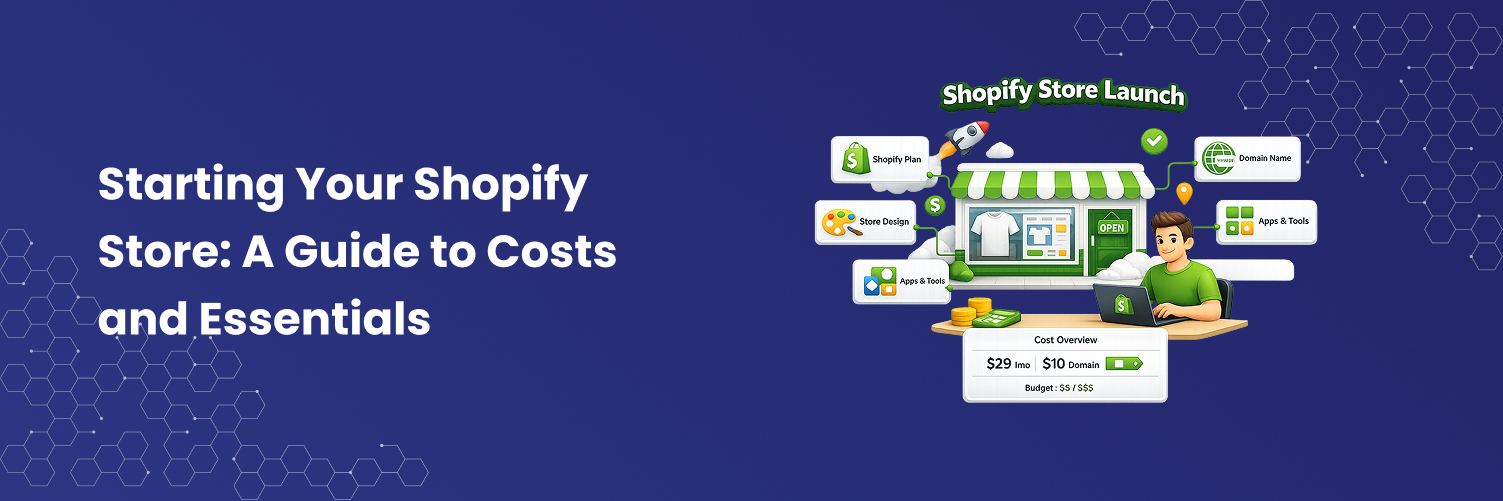
Starting Your Shopify Store: A Guide to Costs and Essentials