
Pre-orders are increasingly becoming a vital factor in driving business growth. They have the potential to significantly boost sales for both physical and online stores. According to a study by Square and Afterpay, customers tend to spend 21% more on pre-order items compared to regular orders. This growing demand for pre-orders presents a prime opportunity for Shopify merchants to stay ahead of the competition and take advantage of this trend.
However, setting up pre-orders on your Shopify store requires strategic planning and proper execution. From establishing clear pre-order policies to integrating the appropriate apps, it’s important to take several steps to ensure a smooth pre-order process for your customers.
In this detailed guide, we’ll walk you through the steps of setting up pre-orders on your Shopify store in 2024. We’ll explore key considerations, share best practices, and recommend the top Shopify apps to help you fully leverage the potential of pre-orders for your business.
What is a Preorder?
Preorders allow customers to purchase products before they are officially released or restocked. When placing a preorder, customers may pay the full price upfront or only a partial amount. However, the product is only shipped once it becomes available.
This approach acts as a reservation system, guaranteeing customers the opportunity to secure a product, whether it's currently out of stock or nearing its launch date, ensuring they receive it as soon as it’s ready.
Merchants typically collect a deposit at the time of the preorder and charge the remaining balance using the customer’s saved payment method once the product is prepared for shipping.
Reasons to Offer Preorders for Your Business
Managing a Shopify store can be challenging, but offering preorders can provide numerous benefits, including increased revenue, more efficient operations, and stronger customer loyalty.
Increase Sales with Preorders
In the world of ecommerce, customers have access to a vast global marketplace, from unique handmade goods to premium electronics. This creates fierce competition for retailers. When a product is out of stock, shoppers will quickly turn to other options.
Preorders give you a competitive edge by securing sales even when a product isn't yet available for immediate shipment. With preorders, you can meet customer demand by accepting full or partial payments upfront, and adjusting payment plans to align with your cash flow needs.
Predict and Meet Customer Demand
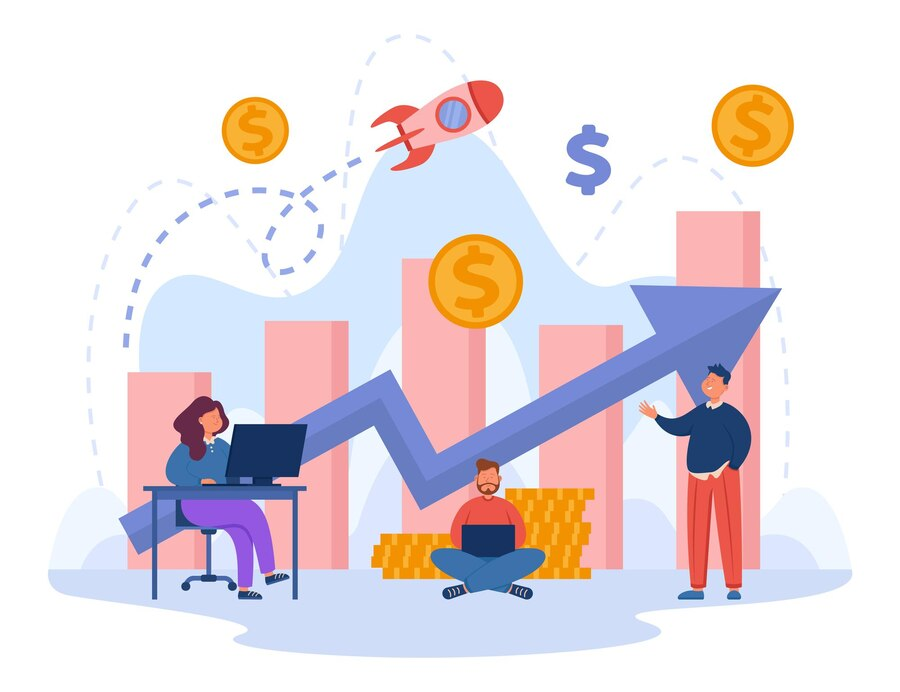
Preorders turn uncertain demand into valuable, actionable data, enabling businesses to better forecast how much of a product they need to produce and stock. This strategy reduces the financial risks tied to product research, design, manufacturing, and inventory purchases. By accepting preorders, you gain meaningful insights into customer preferences, helping you make informed decisions on product features, such as size and color, before production begins.
Moreover, preorders help navigate supply chain uncertainties and minimize risks associated with overstocking or delayed shipments. This allows you to adjust production quantities and timelines based on real demand, ensuring a more efficient process.
Generate Excitement and Fuel Growth
In an era where customers are constantly bombarded with ads and digital content, standing out and capturing attention for new products can be a challenge. Similar to movie trailers that build excitement for upcoming releases, preorders create buzz and anticipation before a product even hits the market, helping to generate interest and drive early sales.

To successfully market preorders, consider these key strategies:
- Create Compelling Product Images and Descriptions: Use high-quality visuals and well-crafted descriptions, including professional editing or samples if needed, to make your product stand out.
- Offer Exclusive Preorder Perks: Incentivize customers with limited-time discounts, early access to products, or exclusive customization options to encourage preorder purchases.
- Promote Preorders Through Paid and Social Media: Leverage paid advertising and social media platforms to effectively reach and engage your target audience.
Additionally, providing exclusive preorder access to your mailing list or loyalty program members not only boosts conversion rates among repeat customers but also fosters stronger brand loyalty by acknowledging their preferences and rewarding their support.
3 Types of Preorder
Pay now
The "Pay Now" option is the most common approach for preorders, where customers pay the full price of the product at the time of placing the order. This method operates similarly to a standard purchase, with the key difference being that the product is shipped at a later date once it becomes available.
When businesses choose the "Pay Now" method for preorders, customers are clearly informed about the expected shipping timeline. This approach offers several advantages for businesses, including:
- Receive Payment Upfront: This is crucial for maintaining healthy cash flow, ensuring businesses have the necessary funds available to manage operations and production.
- Secure Sales Immediately: The "Pay Now" option enables businesses to lock in sales even if the product is currently out of stock, preventing potential loss of customers.
- Automate Stock Updates: Many preorder systems automatically switch to preorder mode when an item is out of stock, keeping customers engaged and reducing the risk of losing sales to competitors.
- Keep Customers Informed: Businesses can customize their preorder pages to clearly communicate expected shipping dates, fostering transparency and trust with customers.
Pay Later Method for Preorders
The "Pay Later" method provides customers with more flexibility, allowing them to either place a deposit or reserve a product without making an upfront payment. Full payment is only required when the item is ready to ship, offering a convenient option for those who prefer to pay at a later stage.
The "Pay Later" method is ideal for businesses looking to:
- Manage Delays in Product Availability: This method offers flexibility, allowing businesses to inform customers about any shipping delays without requiring immediate payment.
- Assess Market Demand: By enabling reservations without upfront payments, businesses can gauge customer interest in a new product before committing to full-scale production.
- Adjust Cash Flow: The "Pay Later" option gives businesses more strategic control over their finances, allowing them to time payments with supplier schedules and manage cash flow effectively.
Crowdfunding Preorders
Crowdfunding is a unique preorder strategy where customers contribute to the development costs of a product in exchange for receiving the product later as a reward. Some key benefits of crowdfunding preorders include:
- Gauge Market Demand: Crowdfunding allows businesses to test market interest and validate product ideas before investing in large-scale production.
- Access Funding Upfront: The contributions from backers provide the capital necessary to cover development and manufacturing costs, reducing financial risk.
- Build an Engaged Customer Base: Crowdfunding campaigns create a community of early supporters who are invested in the success of the product, helping to build brand loyalty from the outset.
Setting Up Preorders on Shopify
Recommended Shopify Apps for Preorders
PreProduct
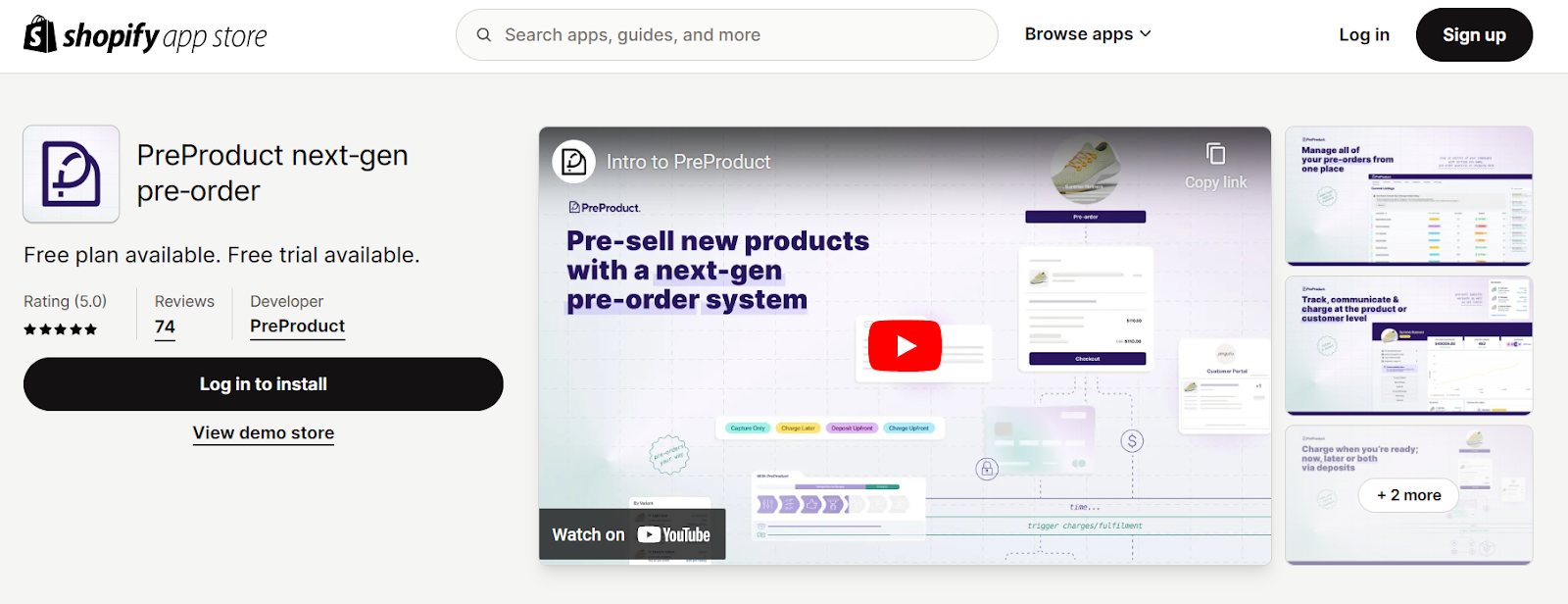
PreProduct is a Shopify app that allows you to accept preorders for products that are not yet available.
Features
- Manage All Preorders in One Place: Keep track of all your preorders from a single, unified platform.
- Offer Flexible Preorder Options: Provide customers with the choice of pay-later or deposit-based preorder options.
- Charge When Ready to Ship: Charge customers when the product is ready for shipment, either via a payment link or a deferred payment schedule.
- Seamless Shopify Integration: Easily integrate with the Shopify platform for a smooth ecommerce experience.
Benefits for Businesses
- Streamlined Preorder Management: Manage all preorders in one place, saving time and reducing complexity.
- Flexible Payment Models: Choose between pay-later or deposit-based preorder options to suit your business needs.
- Control Payment Timing: Decide when to charge customers—either at the time of order or when the product is ready for fulfillment.
- Easy Shopify Integration: Integrates seamlessly with Shopify’s ecommerce system, enhancing your workflow and customer experience.
Example Business Using PreProduct
Endless Blading, a manufacturer of precision inline skate frames, uses PreProduct to manage their preorders. This solution helps them better forecast demand and place orders with their vendors more efficiently.
In general, PreProduct is a highly recommended Shopify app for businesses looking to implement preorders. With its centralized management features, flexible payment options, and seamless Shopify integration, it provides a robust tool for handling preorder sales.
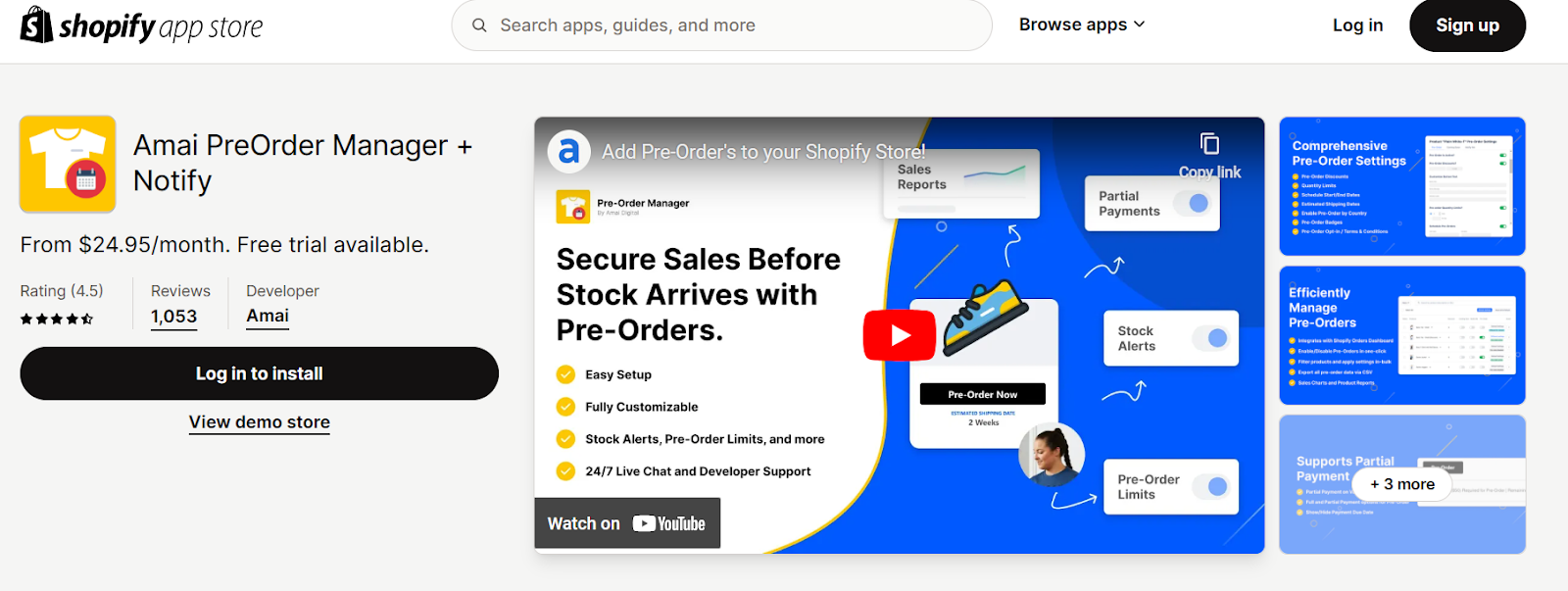
Pre-Order Manager is another useful app that simplifies the preorder process. It automates the logistics of preorders, allowing businesses to focus on promoting their product launches and delivering a great customer experience for those placing preorders.
Key Features:
- Automatically adjusts preorder availability based on current stock levels.
- Prevents customer service challenges by keeping customers informed about expected restock dates.
- Integrates effortlessly with the Shopify platform for a smooth experience.
Advantages for Businesses:
- Simplifies preorder management by automating dates and enabling preorders according to inventory availability.
- Enhances the customer experience by setting clear expectations for when out-of-stock products will be restocked.
- Reduces customer service workload by proactively providing restock updates.
Example Business Using Pre-Order Manager:
EarthBits, a zero-waste store specializing in makeup and cleaning products, uses Pre-Order Manager to handle preorders whenever their products are out of stock. They’ve found that this has “eliminated a significant amount of customer service” since customers are clearly informed about the expected shipping timeline.
In general, Pre-Order Manager is a highly recommended Shopify app for businesses looking to streamline their preorder process. With its ability to sync preorder availability with real-time inventory levels and effectively communicate restock dates, it helps businesses improve operational efficiency while enhancing the customer experience.
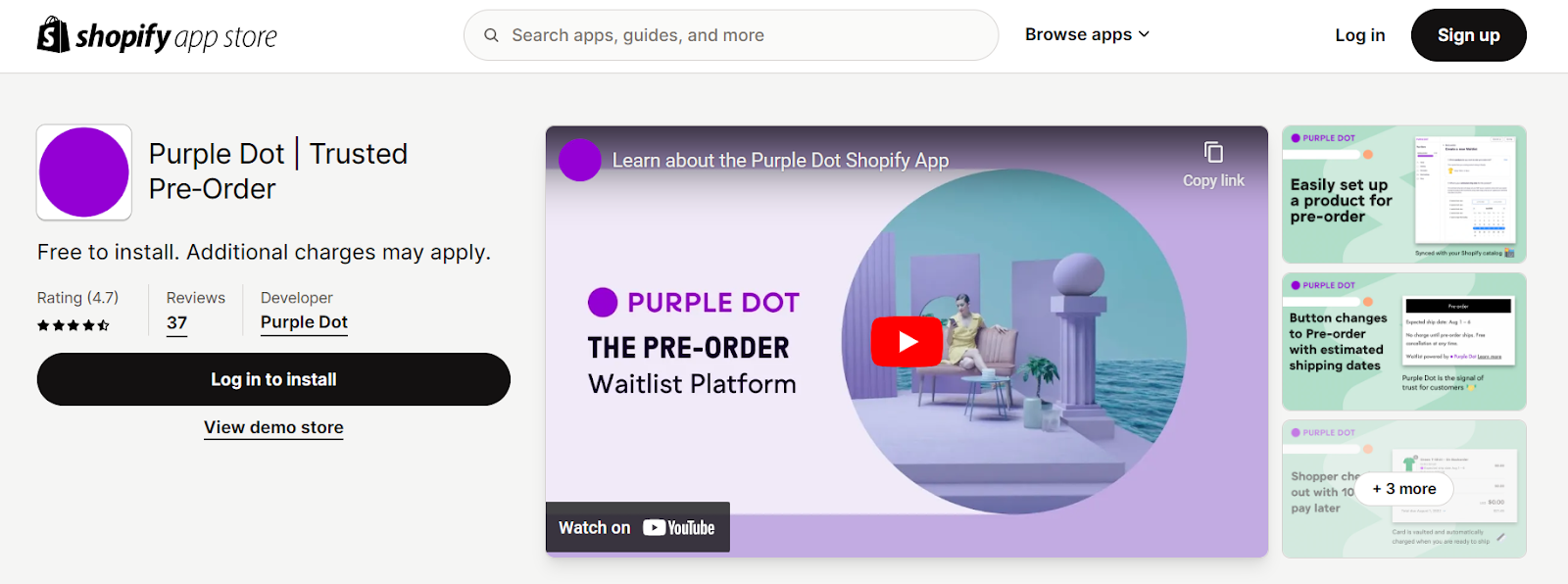
Purple Dot is another Shopify app designed to provide a complete solution for managing preorders and backorders. With a variety of features, it enables businesses to simplify the preorder process while offering an improved shopping experience for customers.
Features:
- Enables easy setup for 100% pay-later preorders.
- Stores customer payment details securely at checkout.
- Charges customers only when the product is ready for shipment.
Benefits for Businesses:
- Simplifies the preorder process with a full pay-later model at checkout.
- Reduces upfront financial requirements by deferring payments until fulfillment.
- Offers flexibility to launch products on schedule, even when some items are in stock and others are on lead time.
Example Business Using Purple Dot:
The menswear brand SPOKE uses Purple Dot for their preorder management. This approach has helped them achieve a sell-through rate that’s 400% higher than initially projected, compared to waiting until products were in stock to sell.
Overall, Purple Dot is a highly recommended Shopify app for businesses looking to offer a seamless deferred payment preorder experience. Its pay-later feature and ability to charge customers at the time of fulfillment make it a powerful tool for managing preorders on the Shopify platform.
Develop a Custom Preorder Solution
For more advanced merchants with specific needs, Shopify offers preorder APIs that enable partners and developers to create custom preorder experiences directly within the Shopify Checkout process.
The key takeaway is that Shopify provides flexible options for setting up preorders on their platform. Whether you choose a pre-built app or prefer a fully customized solution, Shopify ensures that you can implement preorders in a way that best suits your business requirements.