

As an eCommerce business owner, you will inevitably encounter high-risk orders from time to time. These are orders that have a higher likelihood of resulting in chargebacks, fraud, or other issues that could negatively impact your business. With the rise of online shopping during the Covid-19 pandemic, fraudsters have found new opportunities to exploit vulnerabilities.
A global survey of online merchants in 2021 revealed that 75% of respondents experienced an increase in fraud attempts, and 72% saw a significant rise in the fraud rate by revenue since the pandemic began. Additionally, security breaches in the eCommerce industry have contributed to an estimated $20 billion in online payment frauds.
Managing high-risk orders can be difficult, but having a solid strategy in place is crucial for protecting both your business and your customers.
In this article, we’ll walk you through how to effectively handle high-risk orders on Shopify. Let’s dive in!
What are High-Risk Orders on Shopify?
A high-risk Shopify order refers to an order that has a greater likelihood of resulting in chargebacks, fraud, or other issues that raise red flags. Several factors can contribute to making an order high-risk, including:
- Unusual shipping or billing addresses: Orders with shipping or billing addresses that don't match the customer's usual information can be a significant red flag.
- Unusual order patterns: Orders that differ greatly from a customer’s regular purchasing behavior may indicate fraudulent activity.
- High-value orders: Orders with a large dollar amount tend to attract fraudsters seeking to exploit high-value transactions.
- Suspicious email addresses and payment cards: Email addresses that are misspelled or seem suspicious can signal fraud. Likewise, credit or debit cards flagged as lost, stolen, or counterfeit should raise concern.
- Orders from high-risk countries: Certain countries are associated with higher rates of fraudulent activity, so orders from these regions may be marked as high-risk. Additionally, verifying the customer's IP address can help identify suspicious behavior.
How to identify high-risk orders on Shopify?
The first step in managing high-risk orders is to identify them. Thankfully, Shopify offers a range of tools to help you detect such orders. One of the most valuable tools is the Shopify fraud analysis tool, which automatically evaluates each order and assigns a risk level based on a variety of factors.
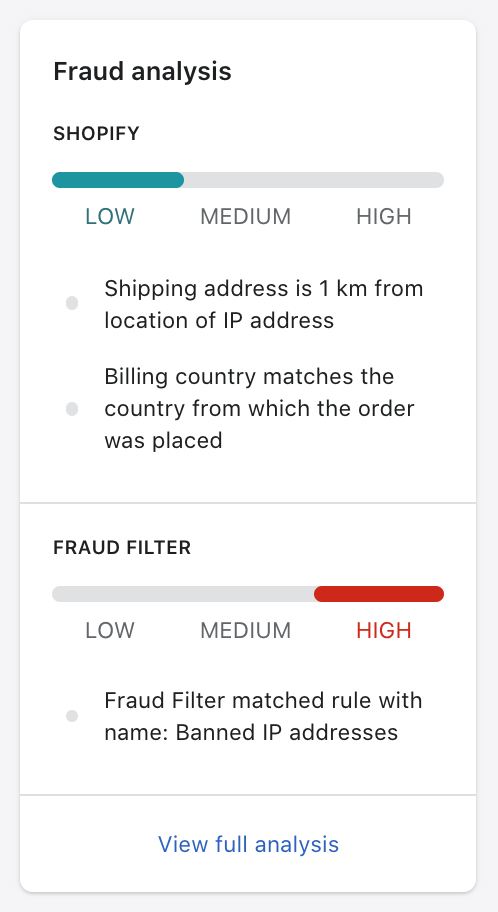
Note: If you're on the basic plan and not using Shopify Payments, you won’t see the risk rating. However, you can still access certain indicators.
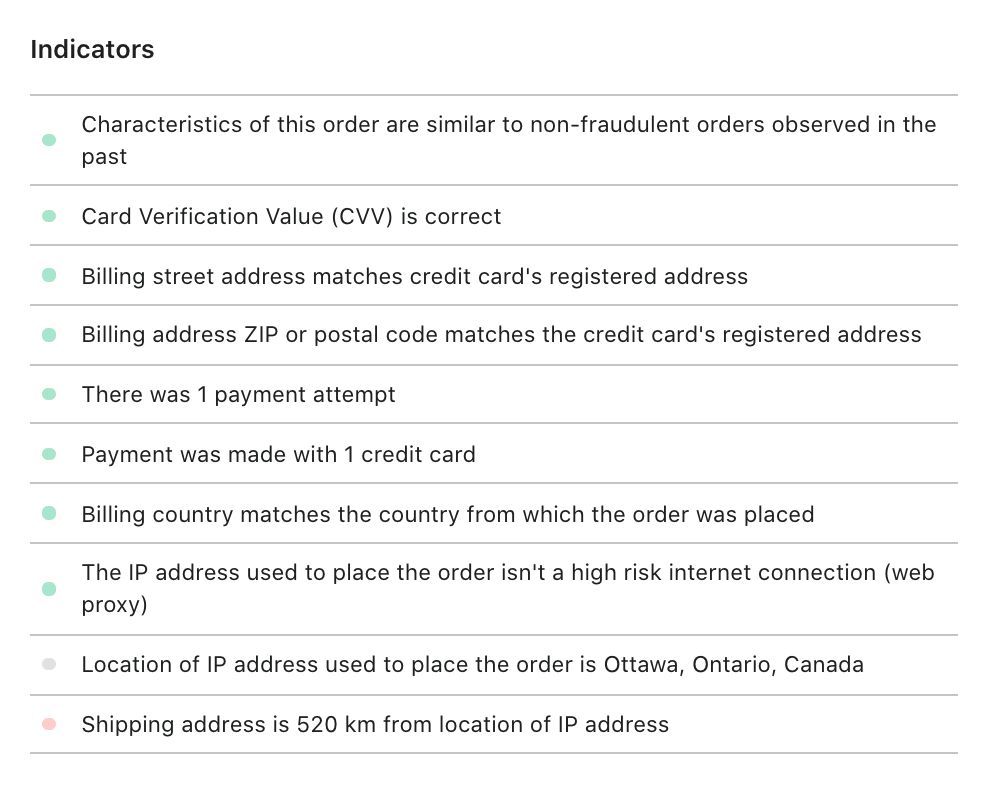
These indicators are color-coded into three categories: Red, Green, and Grey, each signifying different behaviors:
- Green indicators: These indicate that the order details are legitimate and pose no immediate risk.
- Red indicators: These highlight order details commonly associated with fraudulent transactions and alert you to a high risk of fraud.
- Grey indicators: These provide additional information about the order, which can be helpful for further investigation.
You can also use Shopify fraud prevention apps to help identify high-risk orders. In addition to these tools, there are several manual steps you can take to review orders for potential fraud:
- Verify the billing and shipping addresses: Ensure that both the billing and shipping addresses match and are valid.
- Check the order history: Review the customer’s past orders to identify any unusual patterns or significant deviations from their usual purchasing behavior.
- Verify the email address: Confirm that the customer’s email address is legitimate and properly formatted.
- Verify the payment method: Ensure the payment method is valid and that the customer is authorized to use it.
What to do when you receive a high-risk order?
If you receive a high-risk order, it’s crucial to take swift action to protect both your business and your customers. Here are some steps you can follow:
- Review the order details: Carefully examine the order details before deciding whether to decline it. This will help you understand the customer’s profile and the products they’ve ordered.
- Contact the customer: If you’re uncertain about the order, reach out to the customer to verify their information and ask for any additional details.
- Delay shipping: If you suspect the order might be fraudulent, hold off on shipping until you can confirm the details with the customer.
- Cancel the order: If you determine that the order is indeed fraudulent, cancel it immediately to avoid any further issues.
- Report the fraud: If you believe the order is part of a larger fraudulent scheme, report it to the relevant authorities to help prevent further fraud.
How to Prevent high-risk orders on Shopify?
Preventing high-risk orders is far easier than dealing with them after the fact. Here are some proactive steps you can take to reduce the likelihood of receiving high-risk orders on Shopify:
- Use fraud prevention tools: Leverage Shopify’s fraud analysis tool and other third-party apps to help identify high-risk orders before they become a problem.
- Verify customer information: Ensure that the customer’s information is accurate and that their billing and shipping addresses match.
- Use payment verification tools: Implement tools like CVV verification to help prevent fraudulent payments and ensure that the payment method is legitimate.
- Monitor order history: Keep an eye on your customers’ order histories to detect any unusual patterns or orders that deviate significantly from their typical behavior.
- Implement a fraud prevention strategy: Establish a comprehensive fraud prevention strategy that includes both automated tools and manual checks to minimize risk.
How to Manage Chargebacks on Shopify?
Even if you take all the necessary precautions to prevent high-risk orders, chargebacks can still occur. A chargeback happens when a customer disputes a charge and requests a refund from their bank. Chargebacks can be both costly and time-consuming for your business, so it's essential to have a plan in place for managing them.
Here are some steps you can take to manage chargebacks on Shopify:
- Respond promptly: When you receive a chargeback notice, respond quickly and provide all the required documentation to support your case.
- Provide excellent customer service: Ensure that your customers are satisfied with their purchases and have a positive experience with your business. Happy customers are less likely to initiate chargebacks.
- Monitor your chargeback ratio: Regularly track your chargeback ratio and take proactive steps to reduce it if it becomes too high.
Best Practices for Fraud Protection on Shopify:
To protect your Shopify store from fraud, consider implementing these preventive measures:
- Use Fraud Analysis Tools: Shopify offers a variety of tools to help you identify and prevent fraud, including order and risk analysis, IP geolocation, and device fingerprinting. Additionally, you can integrate third-party fraud analysis tools with Shopify for even more protection.
- Set Up Fraud Filters: Fraud filters are customizable rules that automatically flag high-risk orders based on various criteria such as order value, customer location, and payment method. Setting up these filters helps you quickly detect potential fraud and take appropriate action.
- Use Strong Passwords: Weak passwords are a common entry point for fraudsters. Ensure that you and your team are using strong, unique passwords and enable two-factor authentication to secure your accounts.
- Verify Orders Manually: While fraud analysis tools are useful, it’s always a good idea to manually review high-risk orders. This allows you to catch any red flags that automated tools may have missed and take further action if needed.
- Use Secure Payment Methods: Shopify supports a range of secure payment gateways, many of which offer additional fraud protection features such as fraud detection and chargeback protection. Make sure you’re using a payment method that provides these protective measures.
Conclusion
Handling high-risk orders on Shopify can be challenging, but it’s a crucial aspect of running a successful eCommerce business. By taking proactive steps to prevent high-risk orders and effectively manage chargebacks, you can protect both your business and your customers. Use the tools and strategies outlined in this article to help you identify, prevent, and manage high-risk orders on Shopify.